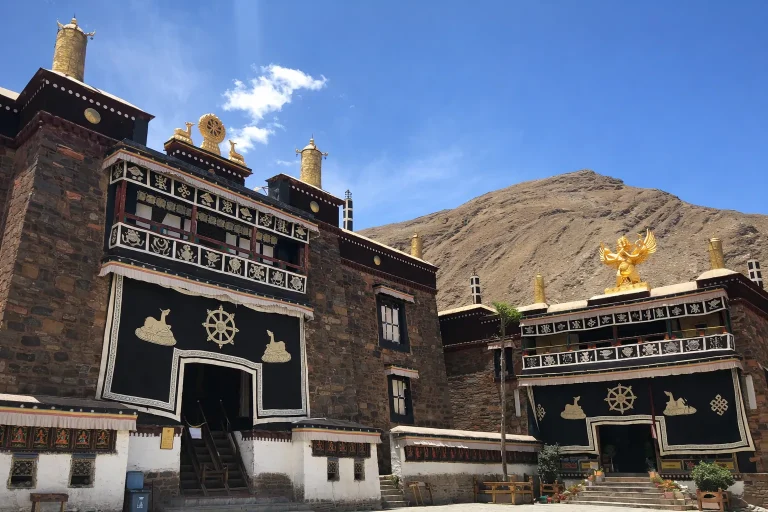
About Yumbulagang Palace
Yumbulagang Palace, dramatically perched on the spur of Mount Zhaxi Ciri southeast of Tsetang in the Shannan region, holds the profound distinction of being the first palace ever built in Tibetan history. Its poetic T...
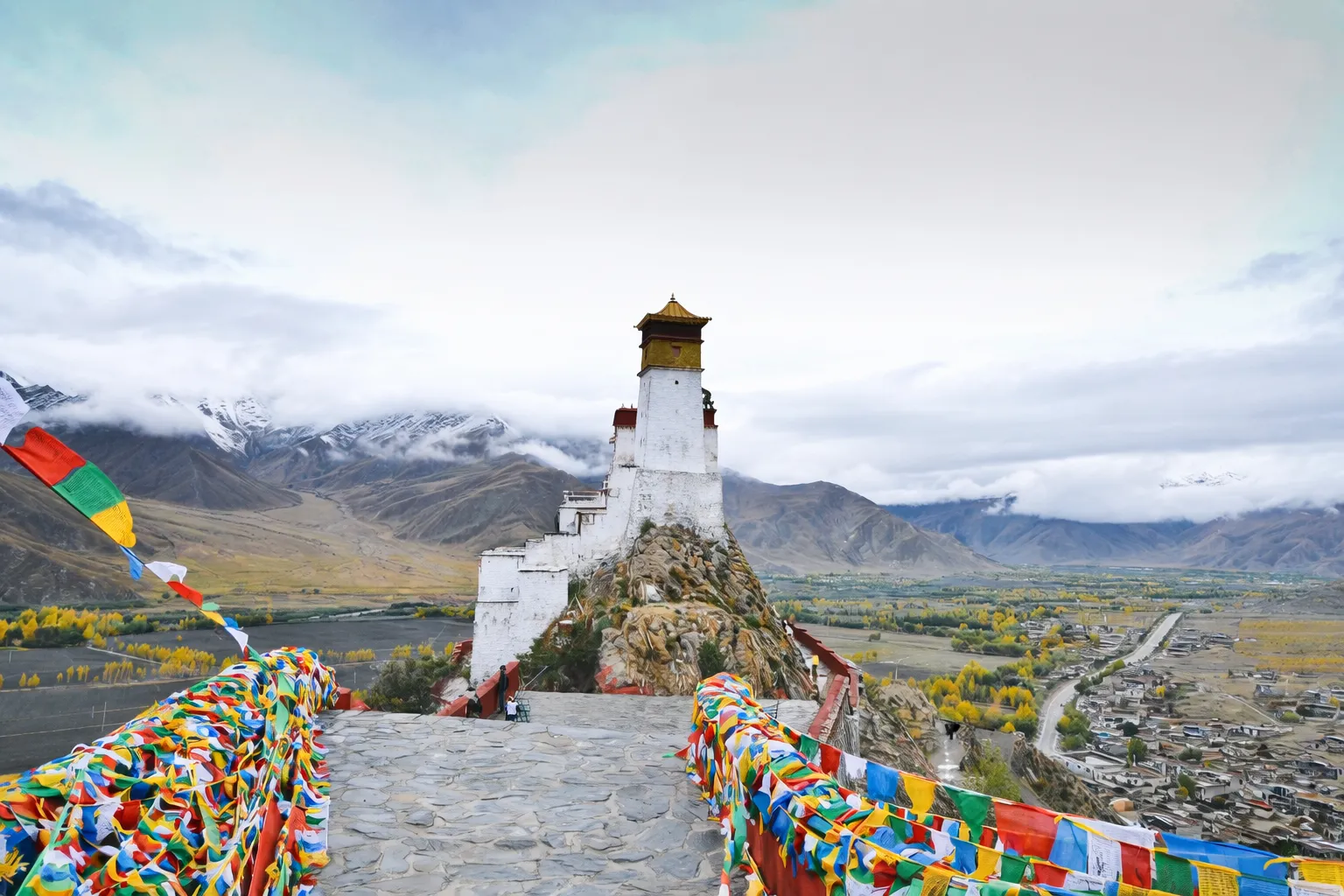
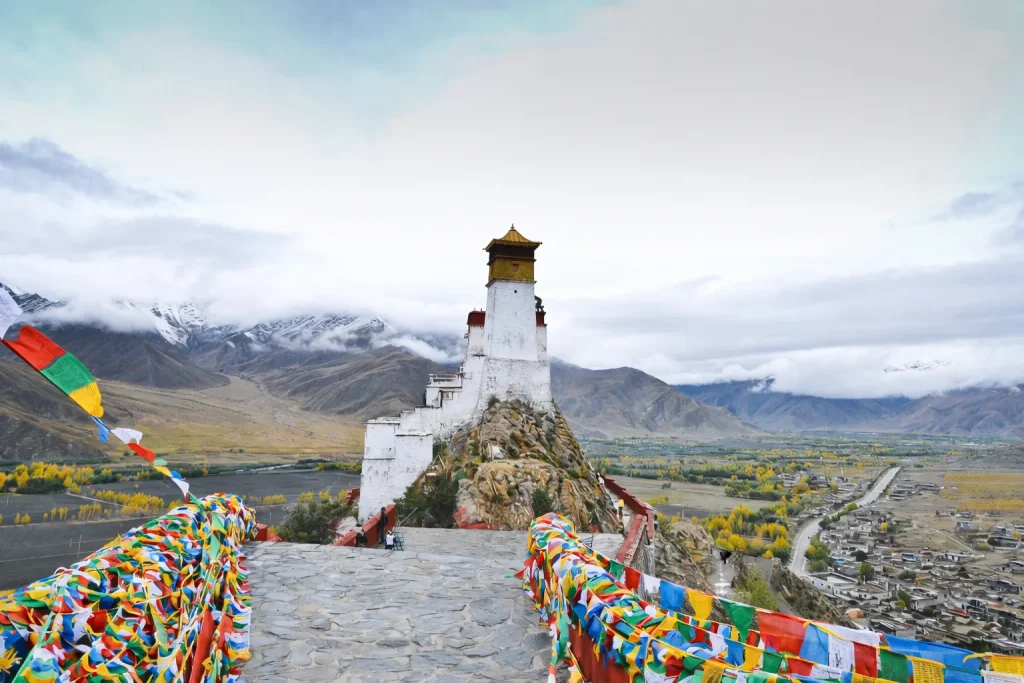
Yumbulagang Palace, dramatically perched on the spur of Mount Zhaxi Ciri southeast of Tsetang in the Shannan region, holds the profound distinction of being the first palace ever built in Tibetan history. Its poetic Tibetan name translates to “the palace built on the hind legs of a doe,” perfectly describing its location on the doe-shaped hill. Rising like a formidable fortress against the sky, its unique and highly recognizable silhouette makes it one of the most dazzling crowns of early Tibetan architecture and a crucial birthplace of Tibetan civilization.
While not as massive as the Potala Palace, Yumbulagang’s commanding position and austere elegance atop the cliffs are truly breathtaking. The structure comprises three main sections: a multi-story front building, a towering watchtower at the rear, and enclosing stone walls. The interior houses precious statues of Buddhas and successive Tibetan kings, alongside exquisite ancient murals that vividly narrate the legend of Tibet’s first king, its first building, and its very first cultivated field.
Standing at the highest point of Yumbulagang, visitors are rewarded with a magnificent panoramic view of the wide and fertile Yarlung Valley below. Here, you can clearly see Zongtvang — revered as the first agricultural field in Tibet. In this magical place, the weight of history and the vastness of nature blend seamlessly, echoing the earliest calls of the Tubo ancestors from more than two millennia ago.
↺ History
Yumbulagang boasts a remarkably long history spanning over 2,100 years. According to historical records and legends, in the 2nd century BC, Nyatri Tsenpo — the first Tsenpo (King) of Tibet — descended from the heavens. The local tribes revered him as their leader and built this magnificent palace for him. From then on, Yumbulagang served as the political center for generations of Tubo kings, witnessing the legendary rise of the Yarlung tribe and their eventual unification of the Snow Plateau.
As the Tubo Dynasty expanded and relocated its capital, Yumbulagang’s role transformed. It later served as the summer palace for King Songtsen Gampo and Princess Wencheng. During the reign of the 5th Dalai Lama, the former royal palace underwent massive renovations and was officially converted into a Gelugpa monastery. Furthermore, legend states that during the reign of the 28th King, Lha Thothori Nyantsen, the very first Buddhist scriptures and a golden stupa fell from the sky onto the roof of Yumbulagang, marking the initial introduction of Buddhism to Tibet and endowing the palace with incomparable sacred significance.
Although Yumbulagang suffered severe destruction during its long history, meticulous reconstruction and preservation efforts by successive generations have restored its former glory. Today, it stands not only as a National Key Cultural Heritage Site but also as the ultimate symbol of Tibet’s historical and cultural roots, drawing countless pilgrims and history enthusiasts each year.
Recommended Tours
View All
6 Days / 5 Nights ★ 4.8
6 Days Tibet Panorama Tour with Nyingchi, Everest & Namtso
3 Days / 2 Nights ★ 4.8
3 Days Nyingchi Grand Canyon & Basum Tso Tour
3 Days / 2 Nights ★ 4.8
3 Days Everest Base Camp Tour from Lhasa
How To Get There
Yumbulagang Palace is located approximately 12 kilometers southeast of Tsetang town in the Nedong District of Shannan City, quietly overlooking the Yarlung Valley. It is an indispensable core attraction on the grand Shannan tourism loop.
Starting from Lhasa, the most common choice is to hire a chartered vehicle or self-drive to Shannan City (Tsetang), which takes about 2.5 to 3 hours over excellent roads alongside the stunning scenery of the Yarlung Tsangpo River. Once in Tsetang, reaching Yumbulagang requires a short 15-20 minute drive. Visitors can easily take a local taxi, ride-hailing service, or tourist minibus to the foot of the hill.
Upon arriving at the scenic area entrance, visitors must climb a steep, zigzagging path to reach the palace at the summit. Although the walk only takes about 15 to 20 minutes, it can be physically demanding at high altitude. Alternatively, visitors can rent a horse or mule from local villagers for a slow ride up the hill (typically costing around 30-50 CNY), while choosing to walk down to better enjoy the panoramic views of the valley.
ⓘ Travel Tips
- Best Time to Visit: May to October is the golden season for visiting Shannan. During autumn (September and October), the agricultural fields in the Yarlung Valley turn a brilliant gold, contrasting beautifully with the snow, blue skies, and ancient palace — an absolute paradise for photographers.
- Altitude & Physical Exertion: At approximately 3,420 meters, the altitude here is slightly lower than Lhasa, reducing the risk of severe altitude sickness. However, the steep climb to the hilltop palace heavily tests cardiovascular endurance. Be sure to walk slowly, breathe deeply, and stop to rest whenever necessary. Never rush or sprint to save time.
- Cultural Etiquette & Photography: As an important cultural heritage site and religious sanctuary, please maintain silence, remove your hat, and strictly follow a clockwise direction when entering the palace halls. Photography is strictly prohibited inside the extremely precious mural and statue halls. However, you are free to capture sweeping panoramas from the exterior terraces and watchtower.
- Itinerary Advice: A complete visit to Yumbulagang takes about 1.5 to 2 hours. It is highly recommended to combine this visit with the nearby Tradruk Temple (Tibet's first Buddhist chapel), the Tombs of the Tibetan Kings, or Samye Monastery to form a classic one or two-day Shannan itinerary, allowing you to fully appreciate the unique charm of Tibet's historical and cultural birthplace.
Enjoy Visa-Free Travel To China & Tibet
China has expanded visa-free entry policies for more countries. Our team can help confirm your route, permits, and documents before departure.
Gallery