About Lhamo Latso
Lhamo Latso, hidden deep within the rugged mountains of Gyaca County in Shannan Prefecture, is undoubtedly the most legendary and sacred alpine lake in all of Tibet. In Tibetan, its name poetically translates to "The ...
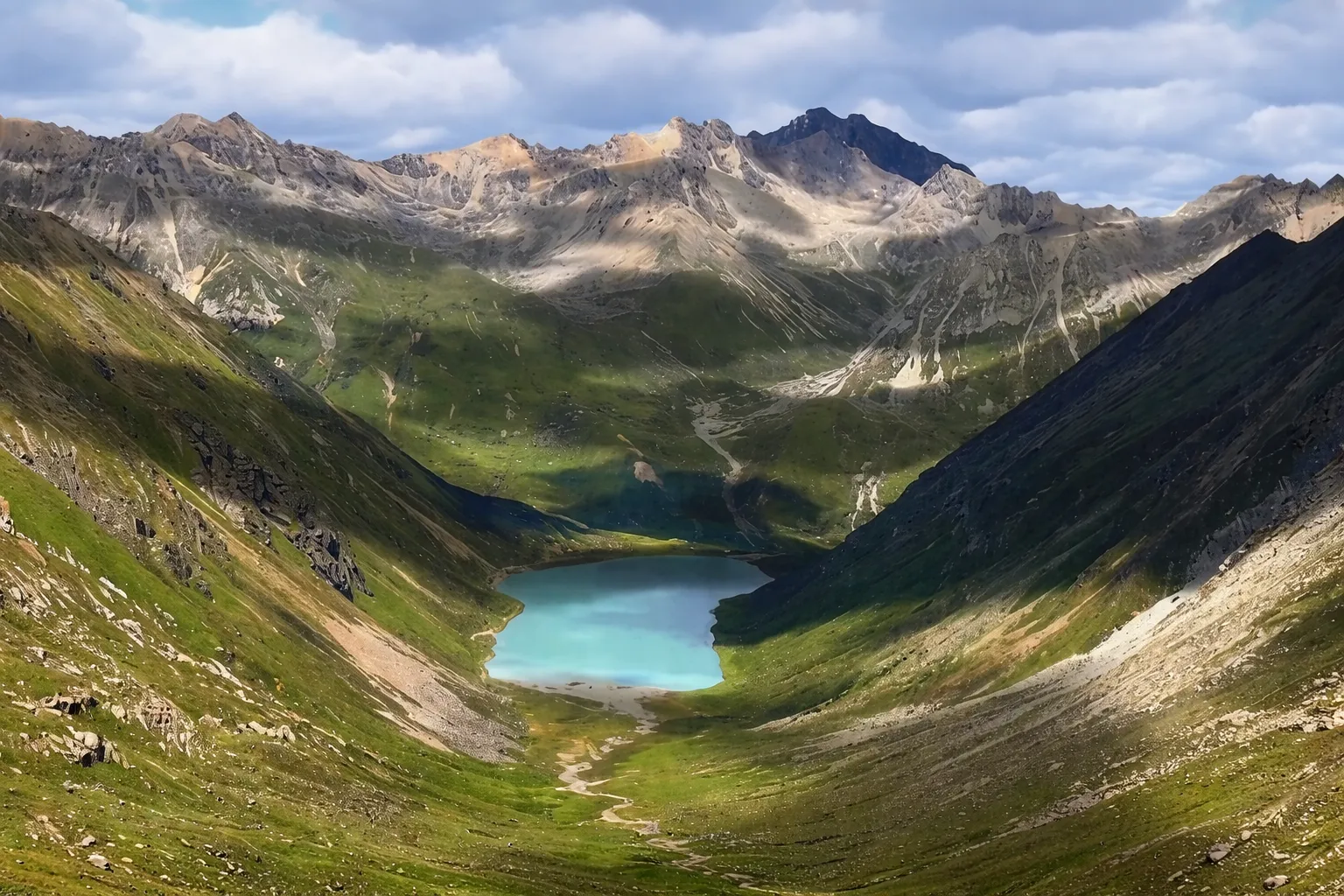
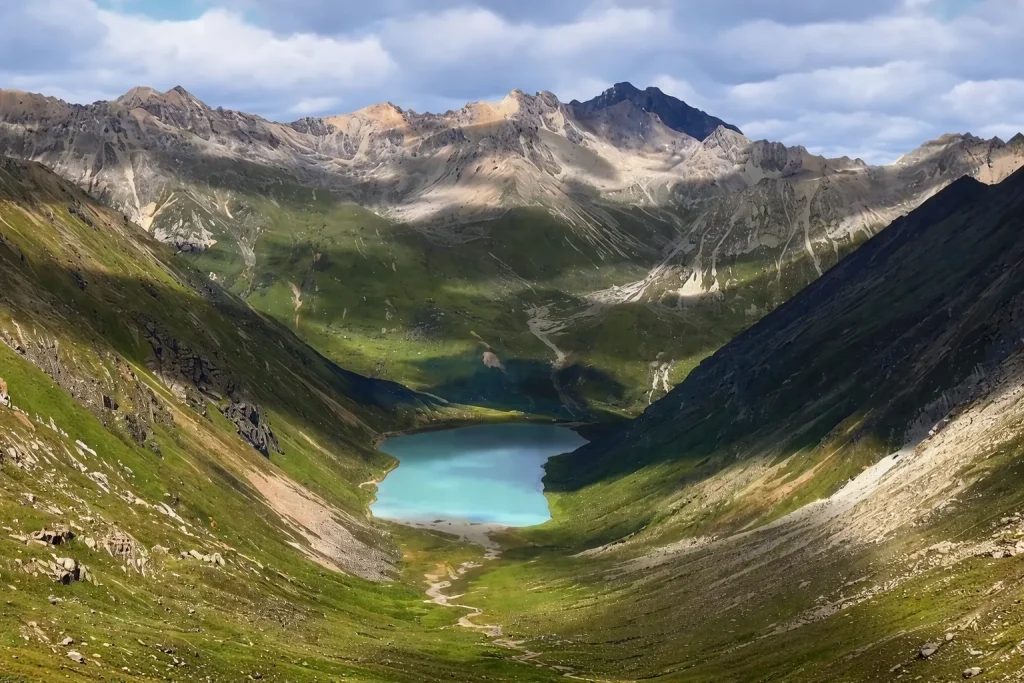
Lhamo Latso, hidden deep within the rugged mountains of Gyaca County in Shannan Prefecture, is undoubtedly the most legendary and sacred alpine lake in all of Tibet. In Tibetan, its name poetically translates to “The Auspicious Heavenly Mother’s Fairy Lake.” Covering an extraordinarily modest area of only about 2 square kilometers, its shape resembles a human skull or a magical hand mirror embedded at the summit of the world. While its physical scale pales in comparison to vast waters like Namtso or Yamdrok Lake, its spiritual standing in Tibetan Buddhism is supreme and entirely irreplaceable.
Lhamo Latso commands awe worldwide under its striking title: the “Oracle Lake.” In the profound belief system of Tibetan Buddhism, this lake possesses unimaginable divine power. It is said that if a truly devout believer sits in quiet meditation before the holy lake and gazes sincerely into its waters, the surface will act as a supernatural screen capable of transcending time and space. The lake reveals vivid, mystical visions of the viewer’s past lives, present existence, and future destiny. Because of this, Lhamo Latso stands as the ultimate, holiest pilgrimage destination for countless Tibetan devotees seeking answers about their soul’s journey.
Standing at the viewing platform on a mountain pass over 5,300 meters high, one looks down to see Lhamo Latso lying silently at the bottom of a colossal, funnel-like valley. Surrounded entirely by barren, treacherous ridges and peaks covered in eternal snow, the environment exudes an intense atmosphere of otherworldly isolation and suffocating religious solemnity.
↺ History
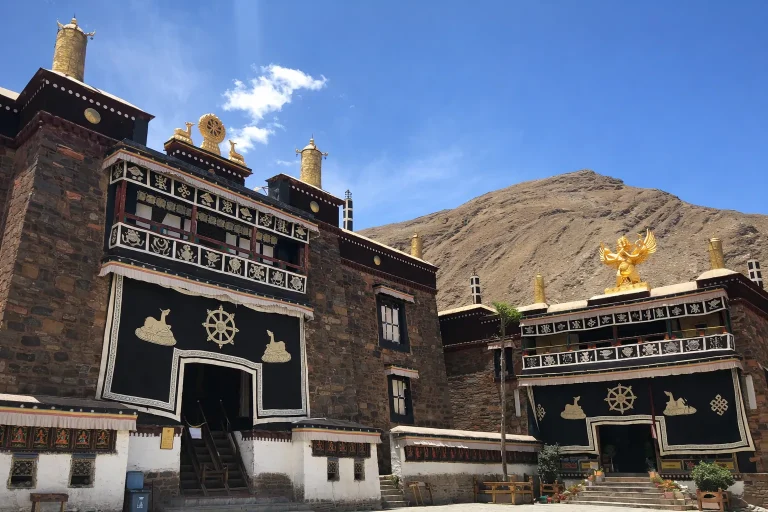
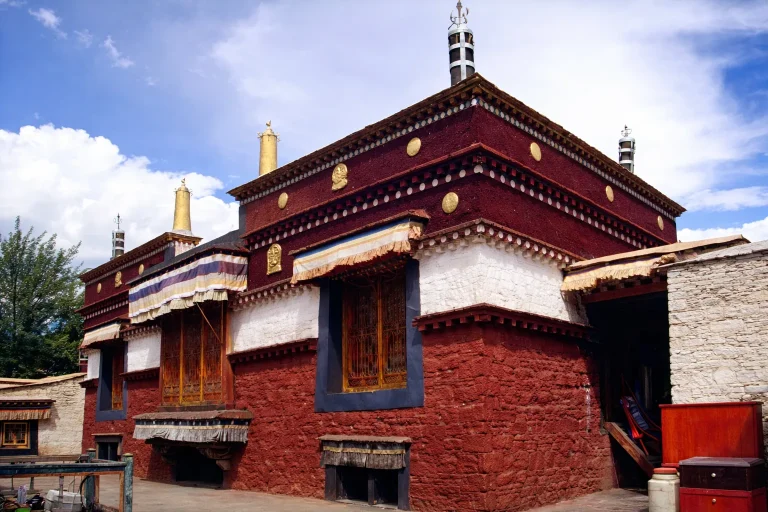
Lhamo Latso serves as the soul-lake (La-tso) of Palden Lhamo, the principal protectress deity of Tibet. In 1509, the Second Dalai Lama, Gendun Gyatso, constructed the famous Chokorgyel Monastery in the valley near the lake. He formally established the profound religious rituals of consulting the lake to receive divine revelations, cementing its supreme status.
Throughout the long history of Tibetan Buddhism, Lhamo Latso has played a desperately crucial, decisive role—it serves as the divine “compass” guiding the search for the reincarnations of high lamas, most notably the Dalai Lamas and the Panchen Lamas. Following the passing of a Grand Lama, a highly respected search party of senior monks will endure a grueling journey to Lhamo Latso. Upon the shores, they conduct solemn pujas (religious ceremonies). As scriptures are softly chanted, the high lamas spend entire days intensely observing the lake’s surface. Historical records recount that the waters mysteriously manifest topographical features of the reincarnated child’s birthplace, detailed images of specific villages or houses, and even Tibetan syllables, pointing the search party in the exact direction they must travel.
For ordinary pilgrims, the journey to Lhamo Latso is equally momentous. In eras past, Tibetan believers endured unimaginable hardships, trekking on foot across glaciers and snow-capped peaks just to reach this sacred site. They firmly believe that merely laying eyes upon Lhamo Latso can cleanse a lifetime of sins, securing the salvation of their soul and securing immense blessings for their next life.
Recommended Tours
View All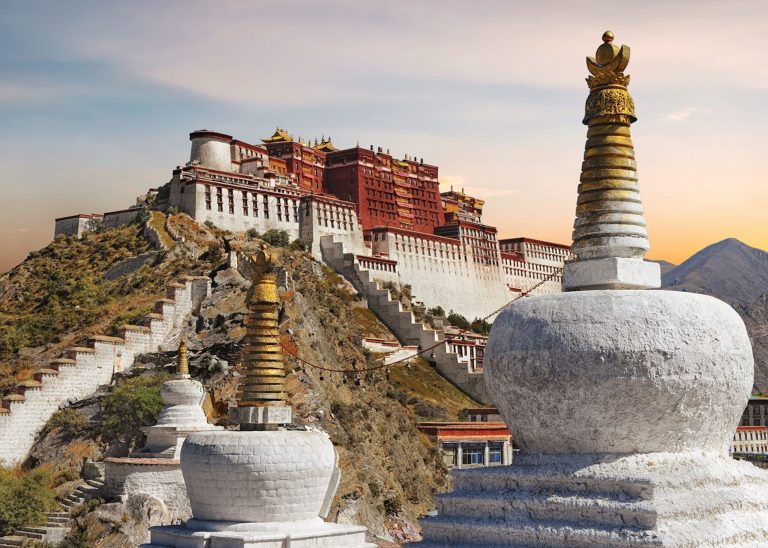
6 Days / 5 Nights ★ 4.8
6 Days Tibet Panorama Tour with Nyingchi, Everest & Namtso
3 Days / 2 Nights ★ 4.8
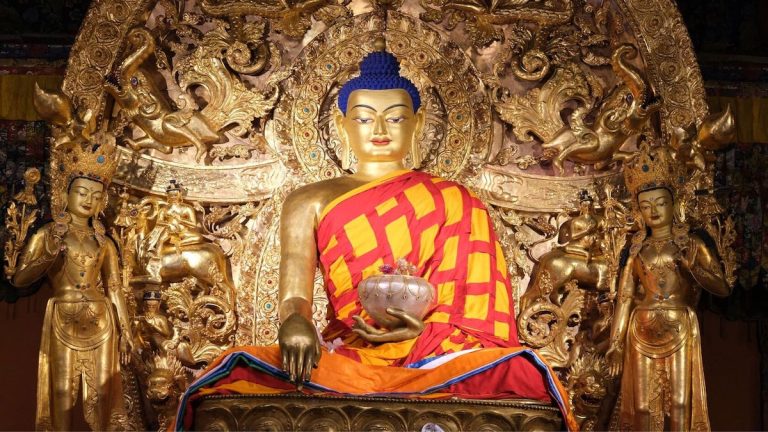
3 Days Nyingchi Grand Canyon & Basum Tso Tour
3 Days / 2 Nights ★ 4.8
3 Days Everest Base Camp Tour from Lhasa
How To Get There
Lhamo Latso is located amid the complex mountain ranges of Chokorgyel in Gyaca County, Shannan, approximately 65 kilometers from the Gyaca county center. It is situated in a highly remote area and does not lie on any primary tourist expressway loops, making it an exclusive, specialized detour.
Departing from Lhasa, travelers typically drive first to the Shannan city center (Tsetang), and then follow the Yarlung Tsangpo River eastward to reach Gyaca County. From Gyaca, the route to Lhamo Latso involves navigating a winding, unpaved, and heavily bumpy mountain road through treacherous terrain, passing the ruins of Chokorgyel Monastery, before finally arriving at a rugged parking lot at the foot of the holy lake. This segment profoundly tests both vehicle performance and driving skill; therefore, utilizing a large-displacement 4WD (four-wheel-drive) off-road vehicle is extremely strongly recommended.
Arriving at the parking lot (elevation approx. 5,100 meters) marks only the beginning of the true ordeal. Visitors must then undertake a short but agonizingly steep hike up a rocky ridge to climb the remaining 200 vertical meters. Though the distance is mere hundreds of meters, in an environment of extreme oxygen deprivation, this brutal physical test usually requires 30 to 45 minutes of grueling effort.
ⓘ Travel Tips
- Extreme Hypoxia and Physical Agony: The viewing pass of Lhamo Latso sits at an overwhelming altitude of over 5,300 meters, where the air is suffocatingly thin. The hike up from the parking lot is extremely painful. You must move as if in slow motion—walk three steps, rest for a minute—and never push yourself. Portable oxygen canisters are an absolute necessity. If you experience severe headaches, nausea, or dangerous shortness of breath, immediately and decisively abandon the climb and descend; your life always comes first.
- Violent and Unpredictable Climate: The weather at the pass is notoriously volatile, changing like a toddler's mood. Experiencing scorching sun, howling gales, hail, and a blizzard all within a single hour is completely routine. Whether you visit in July or August, you must wear your absolute thickest windproof and thermal clothing (hardshell jacket, heavy down liner, windproof hat, and gloves); otherwise, you may not withstand even a few minutes at the top.
- Absolute Reverence and Silence: You are entering a zone of supreme religious sanctity. At the viewing platform, everyone (regardless of personal beliefs) must maintain absolute silence. Loud talking, joking, and shouting are strictly forbidden. The use of drones is completely banned. This is not only a matter of basic respect for the faith but also ensures you do not disturb the devoted pilgrims who are intently consulting the holy lake, seeking visions of their past and future lives.
Enjoy Visa-Free Travel To China & Tibet
China has expanded visa-free entry policies for more countries. Our team can help confirm your route, permits, and documents before departure.
Gallery