About Samye Monastery
Samye Monastery is the first fully established Buddhist monastery in Tibetan history — the first to house the complete "Three Jewels" of Buddha, Dharma, and Sangha — earning it the revered title of "Tibet's First ...
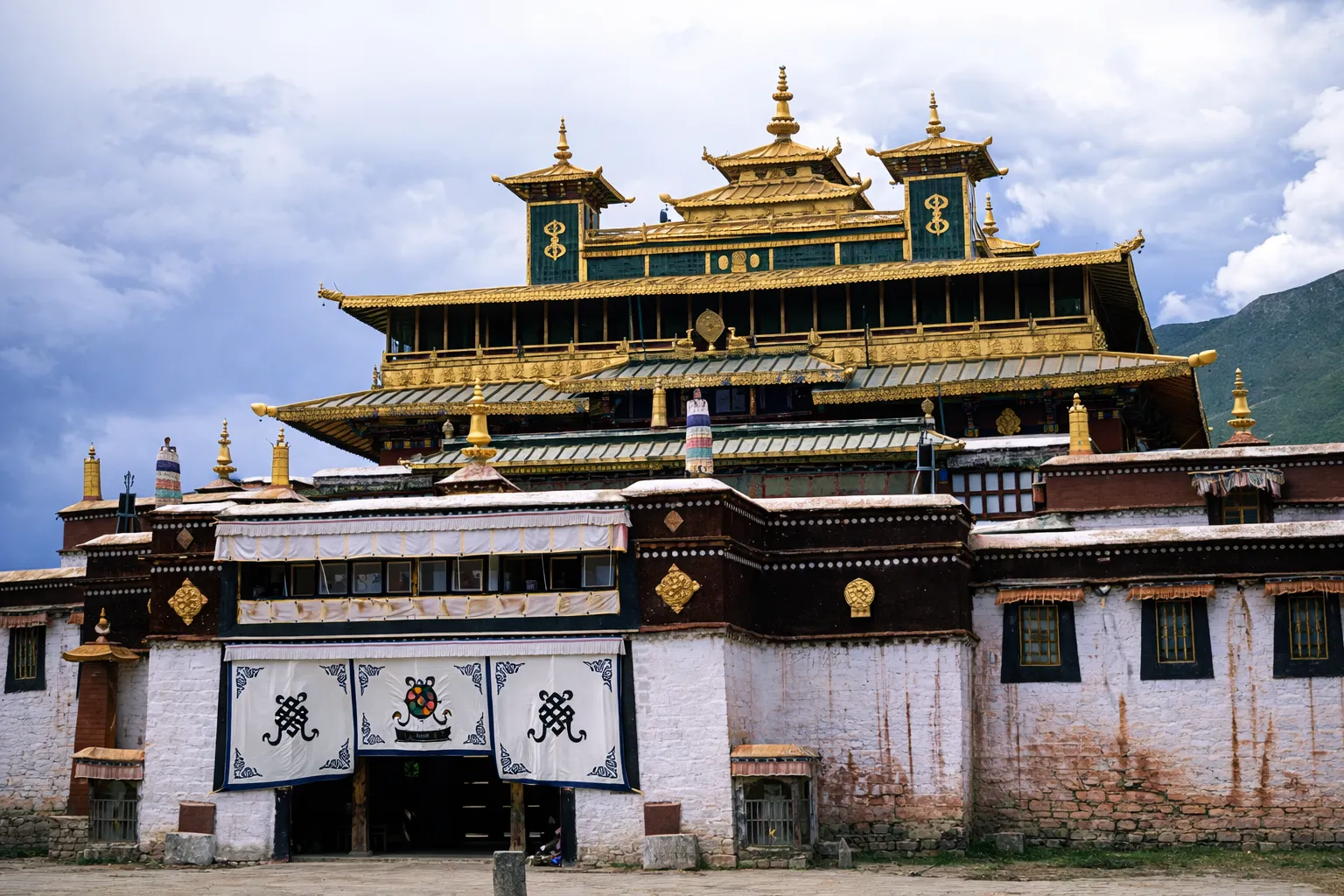
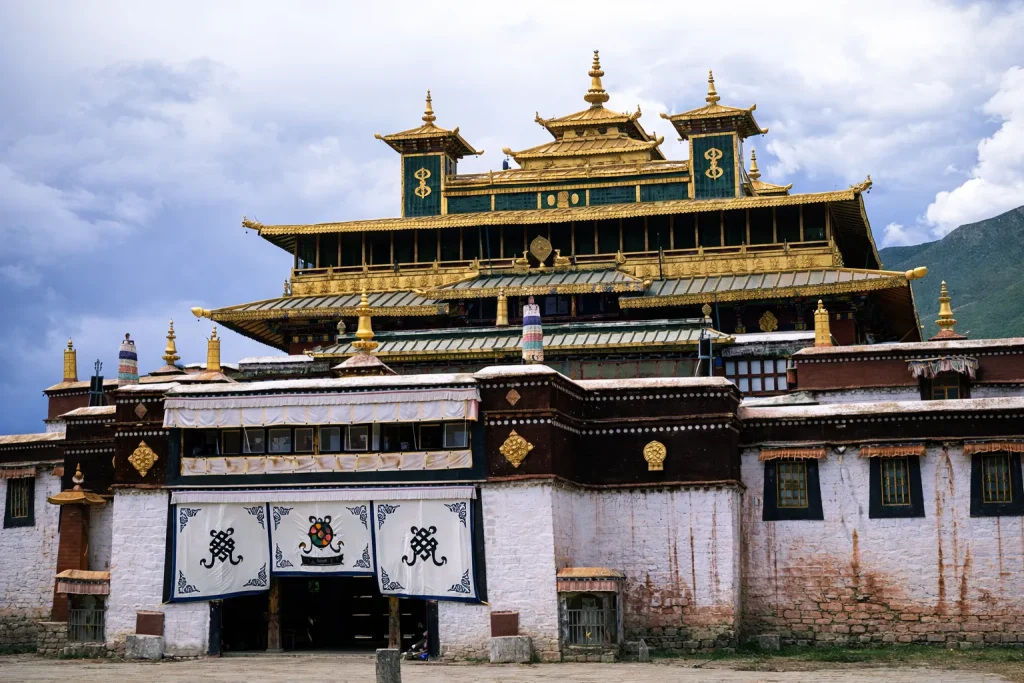
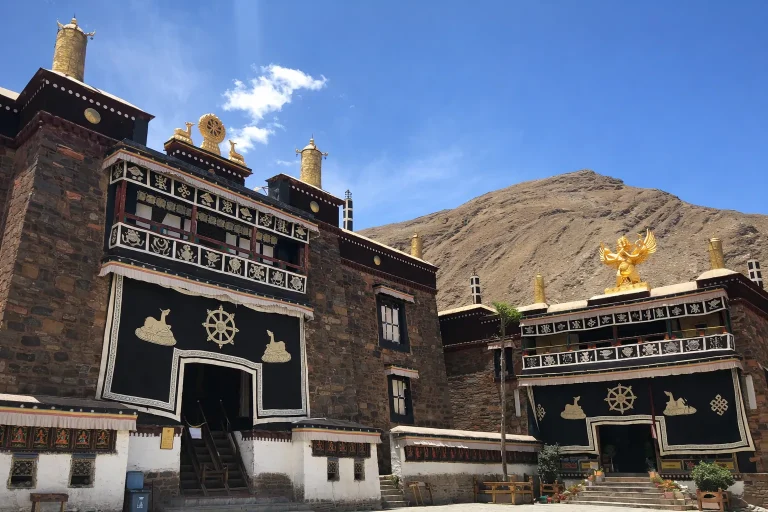
Samye Monastery is the first fully established Buddhist monastery in Tibetan history — the first to house the complete “Three Jewels” of Buddha, Dharma, and Sangha — earning it the revered title of “Tibet’s First Monastery” and an irreplaceable founding role in the history of Tibetan Buddhism. The monastery sits at the foot of Hepori Hill on the northern bank of the Yarlung Tsangpo River in the Shannan region, surrounded by mountains and blessed with magnificent scenery, appearing from a distance like a sacred mandala hidden within a mountain valley.
The most astonishing feature of Samye Monastery is its unique architectural layout — the entire complex is designed as a three-dimensional model of the Buddhist universe centered on Mount Meru. The main hall, Utse, represents Mount Meru at the center of the cosmos, surrounded by buildings symbolizing the four great continents and eight sub-continents, all enclosed within an elliptical wall representing the Iron Mountains that ring the universe. This complete architectural realization of the Buddhist cosmological vision is absolutely unique in the world.
Even more remarkable, the main Utse hall blends three distinct architectural styles across its three floors: the ground floor follows Tibetan design, the second floor adopts Chinese Tang Dynasty style, and the third floor features Indian architectural elements — symbolizing the historical path by which Buddhism traveled from India through China to Tibet. The hall preserves a wealth of precious ancient murals and Buddhist statues, some dating back to the Tubo Kingdom period, making them priceless treasures for the study of early Tibetan art.
↺ History
Samye Monastery was founded in 779 AD under the direction of Trisong Detsen, the 38th emperor of the Tubo Kingdom. Trisong Detsen is celebrated as one of the three greatest “Dharma Kings” in Tibetan history, and he was determined to establish Tibet’s first proper monastery and replace the prevailing Bon religion with Buddhism. To achieve this, he invited the great Indian masters Shantarakshita and Padmasambhava (Guru Rinpoche) to Tibet. Legend holds that the construction was repeatedly sabotaged by demons — walls built during the day would be torn down each night. Only after Padmasambhava subdued the demons through tantric power could the monastery finally be completed. The name “Samye” means “unimaginable” or “beyond what can be conceived” in Tibetan — reportedly the exclamation of Trisong Detsen upon seeing the finished monastery for the first time.
After its completion, Trisong Detsen ordained the first seven Tibetan Buddhist monks — known as the “Seven Chosen Ones” or the “Seven Men on Trial” — from among seven noble youths, marking the formal establishment of the Tibetan Buddhist monastic system. Subsequently, vast numbers of Buddhist scriptures from India and China were translated into Tibetan at Samye, making it Tibet’s most important center for scriptural translation. The famous “Council of Samye” — the great debate between the Indian scholar Kamalashila and the Chinese Chan master Moheyan — was also held here, a pivotal event that profoundly shaped the direction of Tibetan Buddhism for the next millennium.
Over more than 1,200 years of history, Samye Monastery has endured multiple devastating fires and earthquakes, followed by extensive restorations and reconstructions. Despite these trials, the monastery still retains substantial original architectural elements and murals from the Tubo Kingdom period, giving it an extraordinarily deep historical foundation. Today, Samye Monastery is both a National Key Cultural Heritage Site and an important monastery of the Nyingma (Red Hat) school of Tibetan Buddhism, attracting countless pilgrims and history enthusiasts each year.
Recommended Tours
View All
6 Days / 5 Nights ★ 4.8
6 Days Tibet Panorama Tour with Nyingchi, Everest & Namtso
3 Days / 2 Nights ★ 4.8
3 Days Nyingchi Grand Canyon & Basum Tso Tour
3 Days / 2 Nights ★ 4.8
3 Days Everest Base Camp Tour from Lhasa
How To Get There
Samye Monastery is located in Samye Township, Dranang County, Shannan Prefecture, Tibet Autonomous Region, at the foot of Hepori Hill on the northern bank of the Yarlung Tsangpo River. It is approximately 150 kilometers from Lhasa and about 38 kilometers from the Shannan city center (Tsetang).
From Lhasa, there are several transportation options. Hiring a private car is the most convenient choice — driving via the Lhasa-Nyingchi Expressway and national highway takes approximately 3 to 3.5 hours one way, costing around ¥500-800 (car-sharing is available). The journey offers spectacular views of the Yarlung Tsangpo River valley. Public buses depart from Lhasa’s Eastern Suburb Bus Station bound for Samye or Tsetang, with tickets priced at approximately ¥50-80 and a journey time of about 4 hours. From Tsetang, local minibuses or hired cars can take you to Samye Monastery in about 1 hour.
Note that Samye Monastery is situated on the northern bank of the Yarlung Tsangpo River. While reaching it once required a ferry crossing, the Samye Bridge now allows vehicles to drive directly to the monastery vicinity. It is recommended to combine Samye Monastery with other Shannan attractions such as Yumbulagang Palace and Changzhug Temple for a one or two-day itinerary.
ⓘ Travel Tips
- Best Time to Visit: May through October is the ideal visiting season, with mild weather and good road conditions. During the Saga Dawa Festival in the 4th Tibetan month (usually May-June), the monastery hosts grand religious ceremonies with an extraordinarily powerful atmosphere. The annual Cham dance festival in the 6th Tibetan month is another unmissable spectacle.
- Altitude Precautions: Samye Monastery sits at approximately 3,556 meters, slightly lower than Lhasa. However, the journey from Lhasa is quite long and requires extended time in a vehicle, so it is advisable to acclimatize fully in Lhasa (at least 2-3 days) before making the trip. Carry drinking water and high-energy snacks. If you experience headaches or discomfort, reduce activity and rest.
- Cultural Etiquette: Samye Monastery is an extremely sacred religious site. Please dress modestly (covering shoulders and knees) and remove your hat when entering halls. Maintain silence inside the halls, and do not touch Buddhist statues or murals. Always circumambulate and spin prayer wheels in a clockwise direction. Check for photography prohibition signs before taking photos — photography is strictly forbidden in some mural areas. Please respect monks and worshippers engaged in prayer and do not disturb their practice.
- Visiting Tips: Allow 3-4 hours for a thorough visit. Key highlights include the three-story Utse main hall with its distinct architectural styles on each floor, the ancient murals inside, and the four temples representing the four continents. Climbing nearby Hepori Hill (approximately 30 minutes to the summit) offers a panoramic bird's-eye view of Samye Monastery's complete mandala layout — this is the ultimate vantage point for understanding the monastery's architectural genius and is strongly recommended if your fitness level permits.
- Practical Tips: Simple restaurants and basic guesthouses are available near Samye Monastery, though facilities are quite modest. Consider bringing your own lunch or eating in Tsetang before visiting. Local guides are available for hire at the monastery entrance — if you are not well-versed in Tibetan Buddhist history, a guided tour will greatly enhance your experience. Mobile phone signal coverage in Samye Township is generally adequate.
Enjoy Visa-Free Travel To China & Tibet
China has expanded visa-free entry policies for more countries. Our team can help confirm your route, permits, and documents before departure.
Gallery