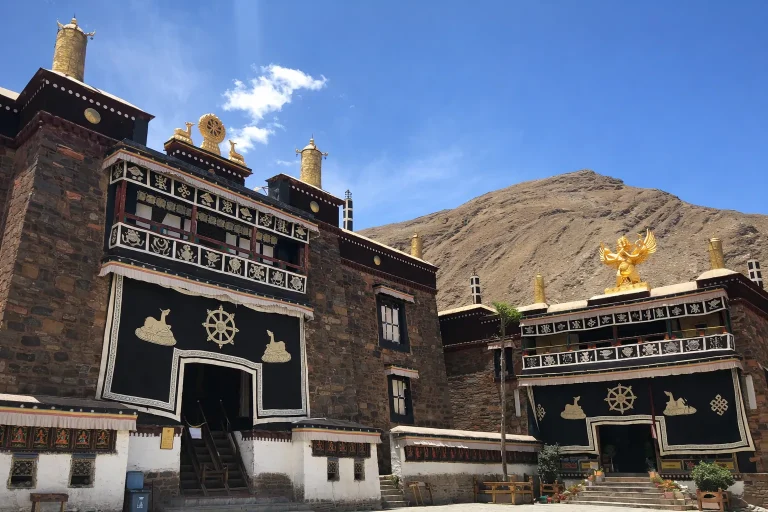
About Tradruk Temple
Tradruk Temple, located about 5 kilometers south of Tsetang town in Shannan, holds the esteemed title of being Tibet's first Buddhist chapel — predating even the famous Jokhang Temple in Lhasa by a few years. If Yum...
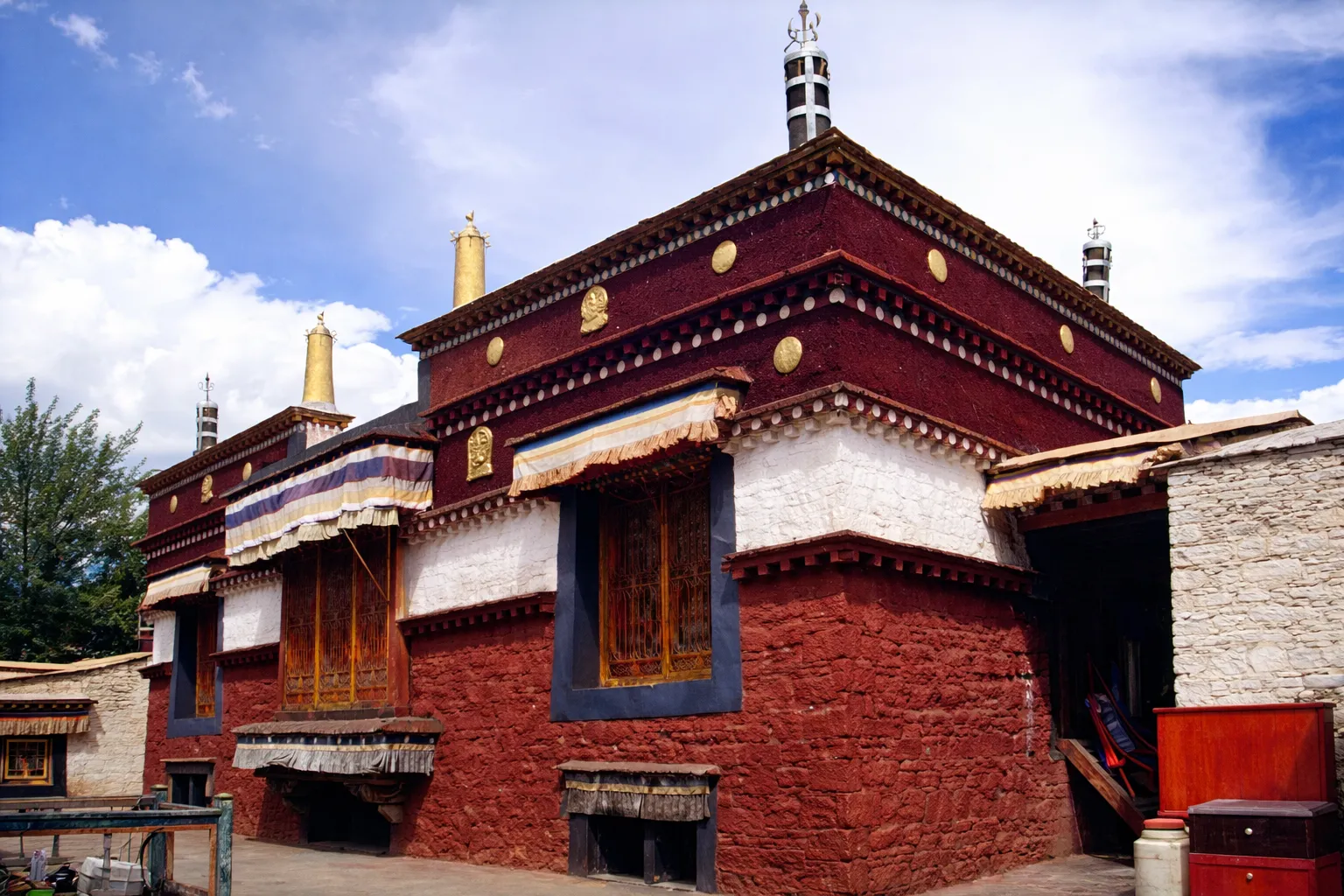
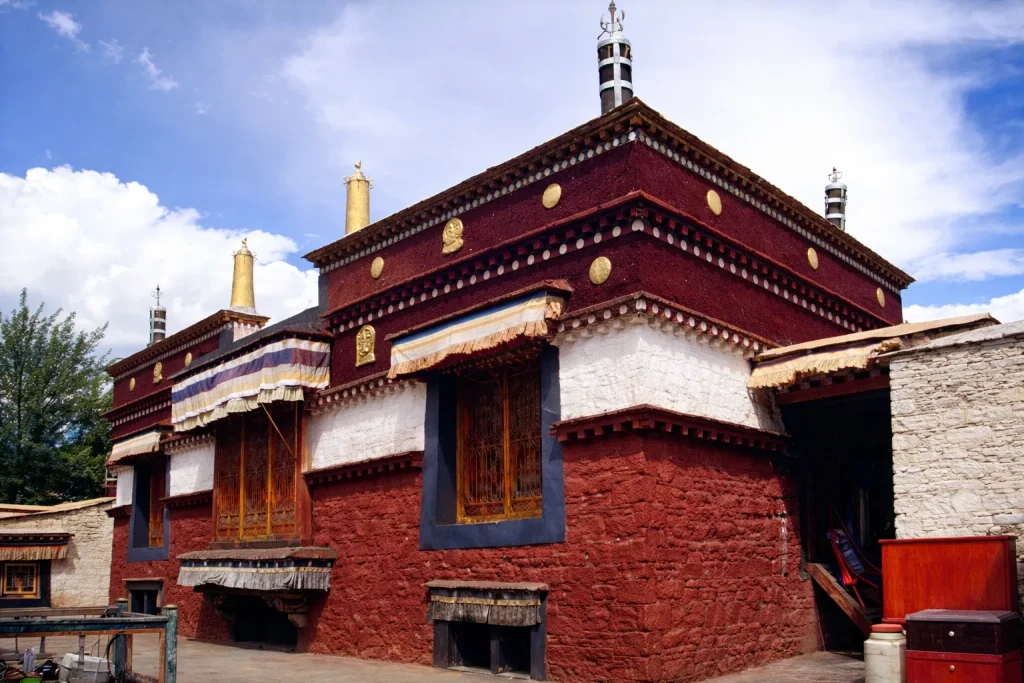
Tradruk Temple, located about 5 kilometers south of Tsetang town in Shannan, holds the esteemed title of being Tibet’s first Buddhist chapel — predating even the famous Jokhang Temple in Lhasa by a few years. If Yumbulagang is Tibet’s first palace, Tradruk is the starting point of Tibetan Buddhism. Though not massive in scale, its red and white buildings look exceptionally ancient and solemn against the backdrop of snow-capped mountains and blue skies.
“Tradruk” means “falcon and dragon” in Tibetan. Legend has it that the site was originally a large lake inhabited by an evil five-headed dragon. To build the temple, King Songtsen Gampo transformed into a giant falcon and, after a three-day battle, defeated the dragon and drained the lake, allowing Tradruk Temple to rise on the reclaimed land.
The absolute, unmissable treasure of Tradruk is the Pearl Thangka of Avalokiteshvara. Embroidered by Gyaltsen Sonam during the late Yuan and early Ming dynasties, this priceless artifact is adorned with 29,026 pearls, as well as countless rubies, sapphires, turquoises, and gold. Its exquisite craftsmanship and luxurious materials are unparalleled not only in Tibet but in the entire world.
↺ History
Tradruk Temple was founded in the 7th century during the Tubo Dynasty, jointly commissioned by King Songtsen Gampo and Princess Wencheng. According to historical records, after arriving in Tibet, Princess Wencheng calculated that the region’s topography resembled a supine ogress. To suppress the negative geomancy around the ogress’s heart (where the Jokhang Temple was subsequently built), she suggested building a temple on the ogress’s left shoulder — thus, Tradruk Temple was born.
It served as the winter palace for Songtsen Gampo and Princess Wencheng in Shannan. The temple still preserves many precious artifacts from the Tubo period, including a clay stove reportedly used by Princess Wencheng, a thangka of Shakyamuni she embroidered herself, and an ancient willow tree she planted. These relics, enduring a millennium of wind and rain, vividly narrate the ancient chapters of cultural exchange between the Han and Tibetan peoples.
During the 17th century, under the 5th Dalai Lama, Tradruk Temple underwent its most significant expansion. The temple gained a golden roof, well-structured assembly halls were renovated, and it was officially converted into a Gelugpa monastery. Today, it stands not only as a National Key Cultural Heritage Site but also as an essential historical archive for profoundly understanding the early development of Tibetan Buddhism.
Recommended Tours
View All
6 Days / 5 Nights ★ 4.8
6 Days Tibet Panorama Tour with Nyingchi, Everest & Namtso
3 Days / 2 Nights ★ 4.8
3 Days Nyingchi Grand Canyon & Basum Tso Tour
3 Days / 2 Nights ★ 4.8
3 Days Everest Base Camp Tour from Lhasa
How To Get There
Tradruk Temple is situated just off a highway approximately 5 kilometers south of Tsetang (the urban center of Shannan) in the Nedong District. It is a highly central stop on the grand Shannan cultural tourism loop.
Because it is so close to Tsetang, transportation is extremely convenient. Taking a taxi or a local minivan from the center of Tsetang takes only about 10 minutes and typically costs around 10-15 CNY. If you have the energy, you can even rent a bicycle in the city and ride there.
Tradruk Temple and Yumbulagang (“Tibet’s First Palace”) are on the exact same tourist route, separated by only about 7 kilometers. The vast majority of tourists and tour groups arrange to visit both sites on the same day — touring Tradruk Temple in the morning to see the Pearl Thangka, and heading to Yumbulagang in the afternoon to overlook the Yarlung Valley from high above.
ⓘ Travel Tips
- Best Time: Visit year-round, but May to October offers the most pleasant climate. As a renowned pilgrimage site, arriving early in the morning during these months allows you to witness the awe-inspiring sight of local Tibetans devoutly circumambulating the temple.
- Relic Protection & Photography: Photography is absolutely strictly prohibited inside most of the temple halls, especially the second-floor exhibition room housing the Pearl Thangka. This is both to protect priceless artifacts and out of respect for the religious site. Please put your cameras and phones away when inside the halls.
- Cultural Etiquette: Maintain silence while visiting, and be sure to walk and spin prayer wheels in a clockwise direction. Remove hats and sunglasses before entering chapels, and do not touch statues, murals, or artifacts.
- Altitude: At an elevation of approximately 3,560 meters (similar to Lhasa) and situated on flat ground with no mountain climbing required, exploring Tradruk Temple is very easy. Most visitors newly arrived in Tibet can handle the visit with no pressure. A typical visit takes about 1 hour.
Enjoy Visa-Free Travel To China & Tibet
China has expanded visa-free entry policies for more countries. Our team can help confirm your route, permits, and documents before departure.
Gallery