About Everest Viewing Platform
The Everest Viewing Platform, situated deep within the core zone of the Qomolangma National Nature Reserve in Tingri County, Shigatse, is the absolute closest geographic point that non-professional climbers and ordina...
The Everest Viewing Platform, situated deep within the core zone of the Qomolangma National Nature Reserve in Tingri County, Shigatse, is the absolute closest geographic point that non-professional climbers and ordinary tourists are legally permitted to approach Mount Everest. For the vast majority of travelers who endure days of grueling, high-altitude overland travel across Tibet, standing on this very platform represents the ultimate culmination of a lifelong dream—the pinnacle of their Himalayan pilgrimage to the “Roof of the World.”
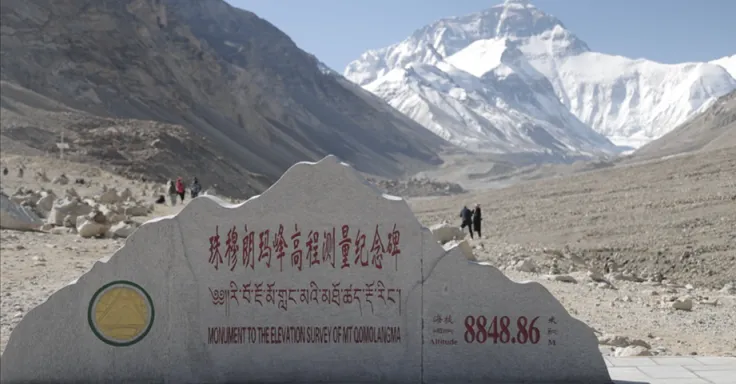
The platform itself is a stark, incredibly vast expanse of barren glacial moraine and gravel. Dominating the center of this desolate, windswept stage is the monumental “Mount Qomolangma Altitude Measurement Monument” (engraved with 8848.86m). This massive stone marker serves not only as a testament to humanity’s relentless exploration of the planet’s extremes but also acts as the ultimate, indispensable photographic proof for every visitor who has finally reached the foot of the highest mountain on Earth.
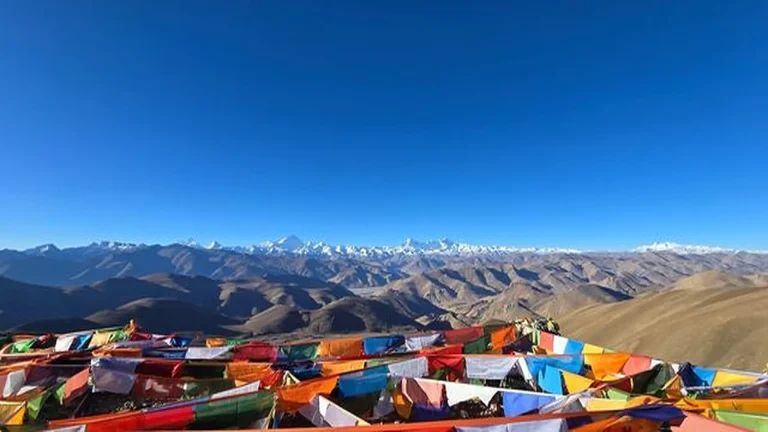
Looking directly south from the howling, exposed plateau of the viewing platform, the unimaginably colossal, ice-armored pyramid of Everest’s North Face violently commands the entire sky. With absolutely zero geographical buffer or visual obstruction in front of it, the sheer, crushing scale of the 8,848.86-meter peak is delivered with terrifying clarity. Standing in its shadow instantly instills a profound, deeply humbling realization of human insignificance in the face of nature’s absolute supremacy.
↺ History
In the decades leading up to recently, the tourism dynamics around Mount Everest were vastly different. Tourists previously had the privilege of driving significantly further south along the glacier edge, reaching the “Old Everest Base Camp,” which was perilously close to the actual, operational staging ground used by elite international mountaineering expeditions.
However, an acute ecological crisis forced a monumental shift. In 2019, to combat the alarming acceleration of glacial retreat and the terrifying accumulation of high-altitude waste caused by the explosion of mass tourism, the Chinese government enacted the most draconian environmental protection measures in the mountain’s history. The “Old Base Camp” was permanently and completely sealed off to all tourists. The viewing boundary was drastically rolled back and permanently established near Rongbuk Monastery, which birthed the modern, highly regulated “Everest Viewing Platform” we see today.
In 2020, following a highly publicized, joint scientific re-measurement expedition conducted by the governments of China and Nepal, the official height of Mount Everest was precisely updated to 8848.86 meters. To immortalize this significant cartographic milestone, a brand-new, polished marble monument bearing this exact figure was proudly erected right on this new viewing platform, instantly transforming it into one of the most famous, heavily photographed, and deeply coveted geographical markers in human history.
Recommended Tours
View All
3 Days / 2 Nights ★ 4.8
3 Days Everest Base Camp Tour from Lhasa
6 Days / 5 Nights ★ 4.8
6 Days Tibet Panorama Tour with Nyingchi, Everest & Namtso
3 Days / 2 Nights ★ 4.8
3 Days Nyingchi Grand Canyon & Basum Tso Tour
How To Get There
The Everest Viewing Platform shares the exact same stringent, heavily controlled geographical access route as the Everest Base Camp tent zone and Rongbuk Monastery. It is situated in Tingri County, demanding a grueling, extreme driving detour of approximately 100 kilometers off the main National Highway 318 (G318) at the Baiba checkpoint.
For all private vehicles, luxury SUVs, and commercial tourist buses arriving from Lhasa or Shigatse, the journey physically ends at the mandatory Environmental Protection Transfer Station, located about 20 kilometers down the valley from the actual viewing platform. No unauthorized civilian vehicles are allowed past this critical threshold under any circumstances.
At this transfer hub, all visitors must disembark, purchase tickets, and board the meticulously regulated fleet of green, zero-emission electric eco-buses. These buses agonizingly crawl up the final stretch of the rocky, meandering glacial river valley. After a 30 to 40-minute drive, the eco-bus drops passengers off at the final terminus. From there, tourists must summon the strength to engage in a seemingly short—but practically agonizing—5-minute hike through the oxygen-starved air to finally step onto the viewing platform and touch the 8848.86m monument.
ⓘ Travel Tips
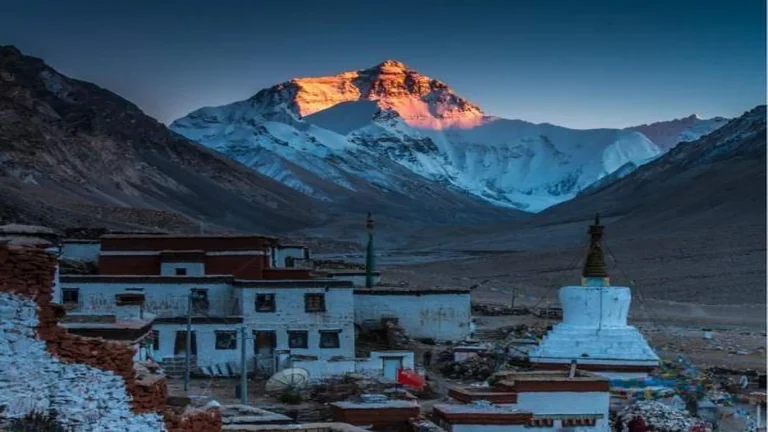
- The Legendary "Alpenglow" (Sun on the Golden Summit): The absolute most magical and sought-after moment on the viewing platform occurs at sunset (which can be as late as 8:30 PM in the summer). If you are blessed with a clear, cloudless western horizon, the setting sun will completely ignite the towering peak of Everest, painting the snow and ice in brilliant, burning shades of gold, orange, and deep crimson. This fleeting, transcendent spectacle is heavily dependent on the crystal-clear skies of Spring (April-May) or Autumn (September-October).
- Bone-Shattering Glacial Wind: The viewing platform offers exactly zero architectural shelter. The gale-force wind sweeping downward directly off the Everest glacier is lethally cold and acts like an invisible barrage of ice daggers against exposed skin. Even under the blinding midday sun of August, the wind-chill factor can freeze extremities within minutes. You absolutely must armor yourself with a heavy, expedition-grade windproof hardshell jacket, thick insulated gloves, and a tight-fitting hat covering your ears. Exposing your head to this freezing draft will trigger an excruciating altitude migraine almost instantaneously.
- Life-Threatening Hypoxia and Line Etiquette: At an altitude of 5,200 meters, your heart and lungs are under catastrophic stress. Securing a photo directly next to the 8848.86m monument requires waiting in a notoriously long, slow-moving line. You must maintain extreme patience and a zen-like calm. Absolutely do not shove, push, run, or engage in any aggressive physical exertion or shouting matches over a spot in line. Such reckless behavior here frequently leads to immediate, dangerous fainting spells, acute mountain sickness, or even fatal pulmonary/cerebral edema. Once you have snapped your photo, politely and swiftly yield the spot to the tired, freezing strangers waiting behind you.
Enjoy Visa-Free Travel To China & Tibet
China has expanded visa-free entry policies for more countries. Our team can help confirm your route, permits, and documents before departure.