About Damxung Grassland
Damxung Grassland is a vast and vital gateway to the legendary Qiangtang grasslands of northern Tibet. "Damxung" translates to "selected pasture" in Tibetan — a name that speaks volumes about the exceptional quality...
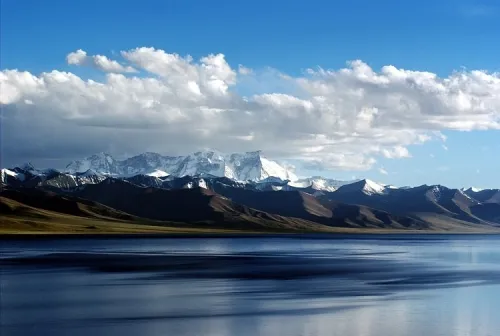
Damxung Grassland is a vast and vital gateway to the legendary Qiangtang grasslands of northern Tibet. “Damxung” translates to “selected pasture” in Tibetan — a name that speaks volumes about the exceptional quality of its water and grass. Nestled in a sweeping valley between the snow-capped peaks of the Nyainqentanglha range, this pristine highland meadow is one of the most representative and atmospheric showcases of Tibetan nomadic life.
Every summer, snowmelt feeds countless winding crystal-clear streams that meander across the flat valley floor. The endless green meadows spread out like a vast soft carpet, dotted with colorful alpine wildflowers swaying gently in the breeze. Hundreds upon hundreds of jet-black yaks and pure-white sheep scatter across this enormous green canvas like black and white pearls, set against the vivid backdrop of blue skies and snowy mountains. In the distance, snow peaks catch the sunlight; nearby, traditional black yak-hair tents send wisps of smoke curling into the air, while Khampa horsemen gallop freely across the open land — together creating the most authentic pastoral symphony of beautiful Tibet.
Compared to the temples and cultural sites in Lhasa, Damxung Grassland offers a perfect cross-section of Tibet’s natural ecology. Here, time seems to stand still, and the vast openness of sky and earth instantly dissolves the noise of the city. For photography enthusiasts, the ever-changing interplay of light and shadow on Damxung Grassland makes it an unparalleled natural studio for capturing wildlife, grassland landscapes, and time-lapse astrophotography of the starry night sky.
↺ History
For millennia, Damxung Grassland has been the cradle of northern Tibet’s nomadic civilization. There is no farmland here — local people depend entirely on herding yaks, Tibetan sheep, and horses for their livelihood. This way of life has given rise to one of Tibet’s most brilliant and distinctive nomadic cultures. The traditional black yak-hair tent is their mobile home, while butter tea, air-dried meat, and yogurt represent their ancient culinary heritage passed down through countless generations.
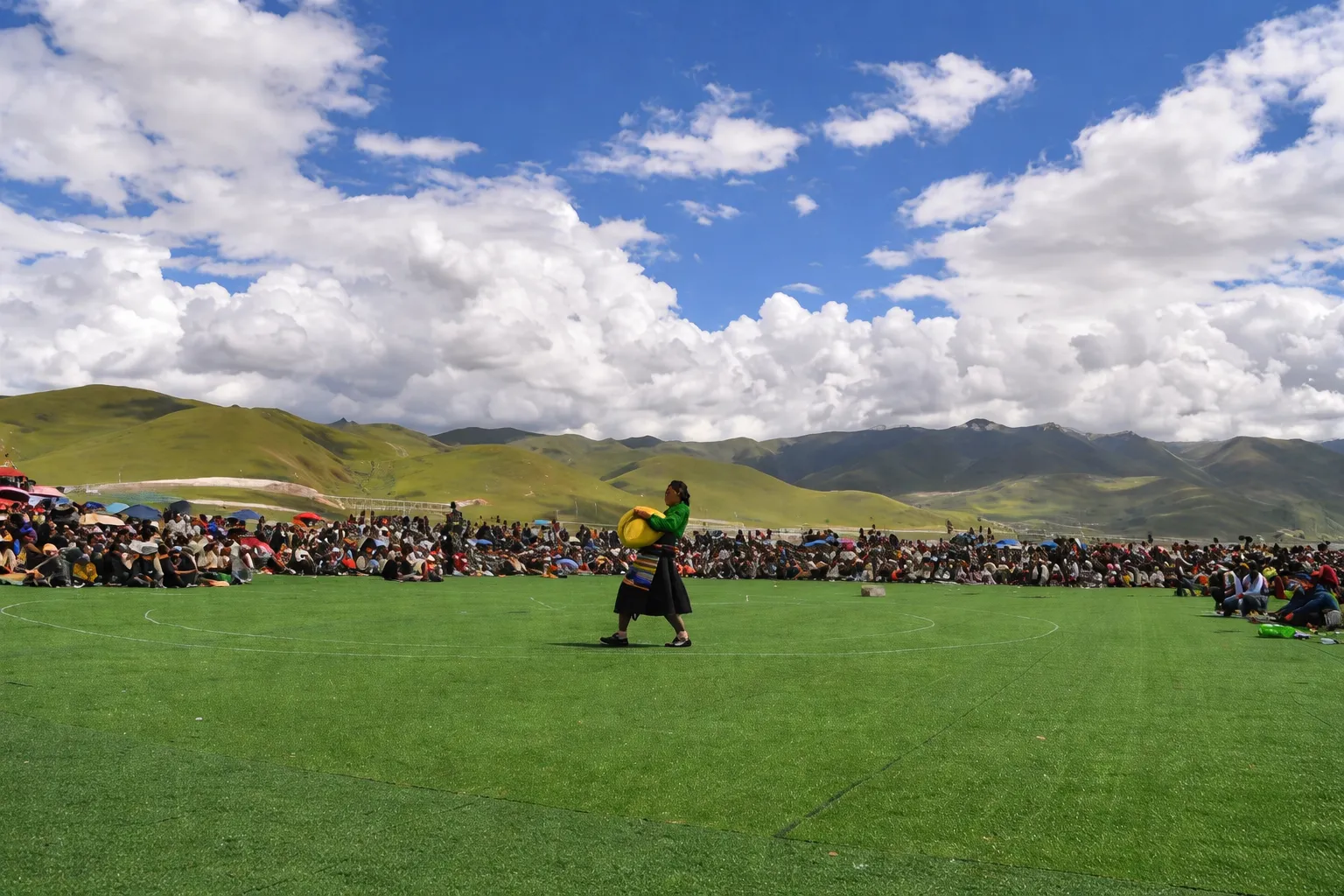
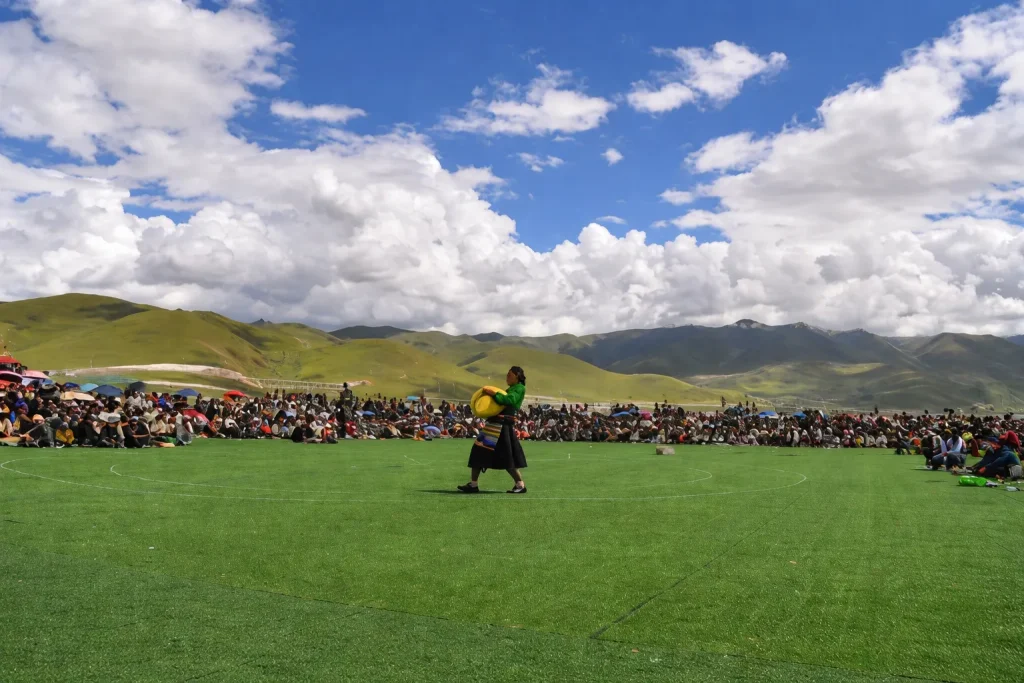
The most famous historical and cultural landmark of Damxung Grassland is the annual “Dangjiren” Horse Racing Festival. Originating in the 17th century, introduced to Tibet by the Mongol leader Gushri Khan, this grand traditional celebration has a history spanning over 300 years. In the past, the horse racing festival served not only as a military review and athletic competition but also as the year’s great carnival — a time when nomadic families scattered across the vast grasslands gathered to trade goods, socialize, and find marriage partners.
In 2008, the Dangjiren Horse Racing Festival was officially inscribed on the Second National List of Intangible Cultural Heritage of China. Today, every year around the 7th month of the Tibetan calendar (approximately August), the entire grassland transforms into an ocean of celebration featuring horse racing, stone-lifting contests, tug-of-war competitions, and traditional Guozhuang circle dancing — a spectacular and joyful cultural event that draws participants and spectators from across the region.
Recommended Tours
View All
6 Days / 5 Nights ★ 4.8
6 Days Tibet Panorama Tour with Nyingchi, Everest & Namtso
3 Days / 2 Nights ★ 4.8
3 Days Nyingchi Grand Canyon & Basum Tso Tour
3 Days / 2 Nights ★ 4.8
3 Days Everest Base Camp Tour from Lhasa
How To Get There
Damxung Grassland is located in Damxung County, north of Lhasa, distributed primarily along both sides of the Qinghai-Tibet Highway (G109) in the Damxung section and along the road leading to Namtso Lake.
Driving from Lhasa, you enter the grassland area after approximately 2 hours. There are no entrance gates or ticket booths to look for — because as you cruise along the G109 highway, the endless, breathtaking green landscape stretching to the horizon on both sides of the road IS the Damxung Grassland. If traveling by chartered car or self-driving, you can pull over at any safe parking area along the highway and step directly into this natural wonderland of vast blue sky and emerald-green meadows.
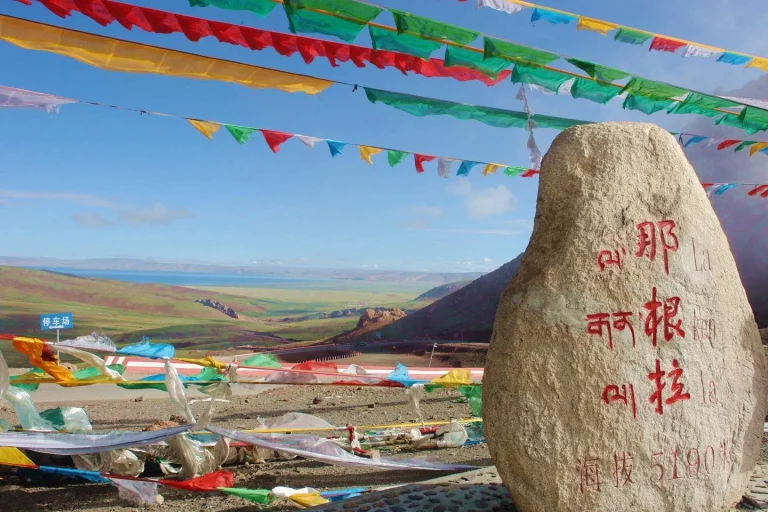
Virtually all tour buses heading to Namtso Lake pass through this grassland. If time permits, tour groups typically make one or two brief stops at designated nomad tent rest areas along the way, giving visitors a chance to step out of the vehicle, breathe the fresh highland air, and experience the authentic grassland atmosphere up close.
ⓘ Travel Tips
- Best Time to Visit: June through September is the absolute golden season for visiting Damxung Grassland. This is when the grass grows most lush, wildflowers bloom in profusion, and the landscape is at its most vibrant and alive. The August "Dangjiren" Horse Racing Festival is the ultimate opportunity to experience authentic Tibetan folk culture at its most exuberant. In autumn (October), the grassland transforms into a sweeping canvas of gold — hauntingly beautiful in its vast, melancholic grandeur. In winter, thick snow blankets the land, turning it into a stark white wilderness.
- Respect Private Pastures: When stopping by the roadside, please pay careful attention to any barbed wire fencing. Areas enclosed by wire fencing are private winter pastures belonging to local nomadic families. Entering these fenced areas without the owner's permission is strictly prohibited. Do not drive vehicles onto the grassland and crush the vegetation. High-altitude meadow ecosystems are extremely fragile, and once damaged, recovery takes many years.
- Photography Etiquette: When you spot herds of yaks near the road and want to approach for photographs, always look around for the herder (owner) first. Many pastoral areas have unwritten but well-established fees for photographing their livestock. Politely asking whether you may take photos and what the cost might be before shooting will save you unnecessary trouble and potential conflict.
- Sun Protection and Insects: At approximately 4,200 meters with absolutely no shade or shelter, the midday ultraviolet radiation can burn exposed skin in minutes. A sun hat, sunglasses, and high-SPF sunscreen are essential summer items. Additionally, during the lush summer months, areas near water puddles and streams teem with aggressive mosquitoes and horseflies. Wearing long sleeves, long pants, and carrying insect repellent spray is strongly recommended.
Enjoy Visa-Free Travel To China & Tibet
China has expanded visa-free entry policies for more countries. Our team can help confirm your route, permits, and documents before departure.
Gallery