About Mount Namcha Barwa
Mount Namcha Barwa, piercing the sky at an elevation of 7,782 meters in Nyingchi, is the undisputed highest peak in the eastern Himalayas. Crowned "The Most Beautiful Snow Mountain in China" by Chinese National Geogra...
Mount Namcha Barwa, piercing the sky at an elevation of 7,782 meters in Nyingchi, is the undisputed highest peak in the eastern Himalayas. Crowned “The Most Beautiful Snow Mountain in China” by Chinese National Geography, its sheer, arrow-like triangular summit completely dominates the surrounding landscape. Unlike the barren, icy aesthetic of Everest, Namcha Barwa presents an unparalleled vertical landscape. Plunging from its eternal snows down to the humid, tropical green floor of the Yarlung Tsangpo Grand Canyon below, it creates a staggering geological drop of nearly 5,000 vertical meters—one of the absolute steepest and most dramatic elevation changes on Earth.
Despite its breathtaking beauty, Namcha Barwa is notoriously famous among travelers as the “Shy Mountain” (ten visitors, nine won’t see it). Its towering summit acts as a massive wall blocking the warm, wet monsoon air advancing up the Tsangpo gorge. This geographical collision means the peak is almost perpetually veiled in incredibly thick, swirling clouds. Clearly witnessing the razor-sharp main peak fully exposed against a brilliant blue sky is considered an event of immense luck and a profound spiritual blessing.
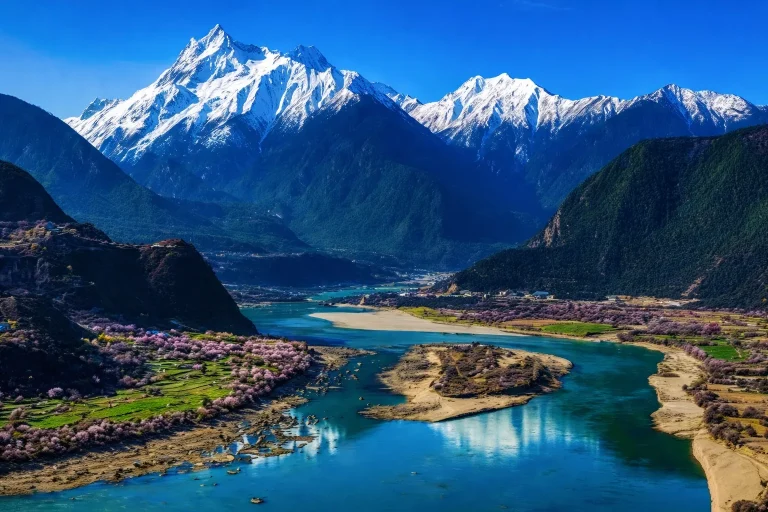
When the clouds do miraculously part, the overwhelming visual supremacy of Namcha Barwa is completely paralyzing. The colossal, ice-armored, spear-like summit bursting out of a sea of clouds, hovering violently above primeval green forests and a roaring canyon river, is a scenic masterpiece that permanently etches itself into the memory of every fortunate observer.
↺ History
Namcha Barwa possesses extraordinarily deep roots in Tibetan mythology. Its name loosely translates to “A spear piercing into the sky” or “Burning thunderbolt.” According to local folklore, Namcha Barwa and the adjacent Mount Gyala Peri were brothers. In a fit of immense jealousy over his younger brother’s height, Namcha Barwa allegedly decapitated Gyala Peri. This is the mythical explanation for why Mount Gyala Peri has a remarkably flat, truncated top today. As divine punishment for his heinous crime, Namcha Barwa was condemned to hide his majestic, prideful face in the clouds forever.
In the actual history of world mountaineering, Namcha Barwa commanded terrified respect. Despite its “modest” 7,000+ meter height compared to the 8,000-meter giants of the central Himalayas, it was recognized as one of the last major unclimbed peaks on Earth. Its incredibly complex and unstable icefalls, extreme avalanche-prone slopes, and ferociously unpredictable monsoon weather made it a deadly, impossible fortress for decades.
It wasn’t successfully summited until late 1992 by a highly determined joint Sino-Japanese mountaineering expedition, conquering the peak long after Everest, K2, and other taller mountains had fallen. Today, commercial mountaineering is heavily restricted, allowing Namcha Barwa to firmly retain its pristine, untouchable, and wildly untamed isolation.
Recommended Tours
View All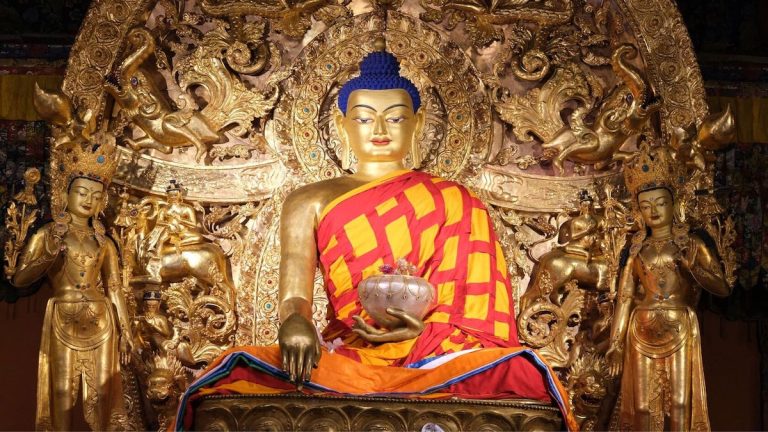
3 Days / 2 Nights ★ 4.8
3 Days Nyingchi Grand Canyon & Basum Tso Tour
6 Days / 5 Nights ★ 4.8
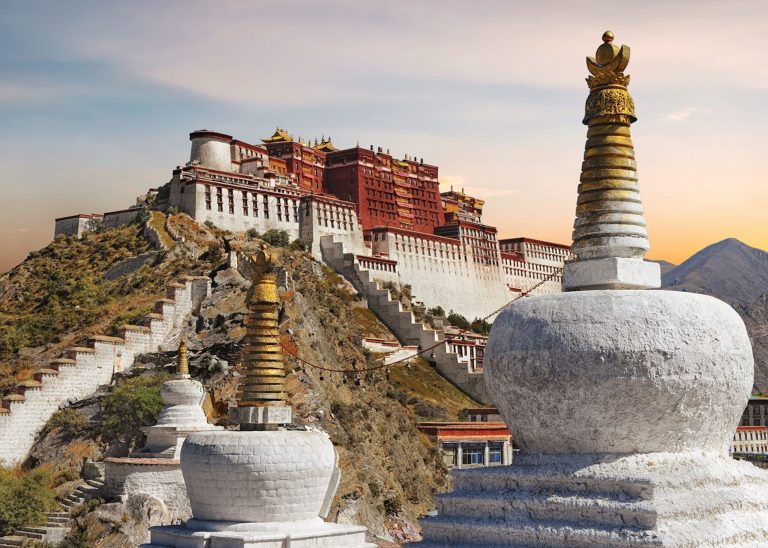
6 Days Tibet Panorama Tour with Nyingchi, Everest & Namtso
3 Days / 2 Nights ★ 4.8
3 Days Everest Base Camp Tour from Lhasa
How To Get There
Visiting and viewing Mount Namcha Barwa does not involve physically arriving at or attempting to climb the mountain itself. Instead, the focus is on traveling to several world-class observation decks strategically located throughout Nyingchi.
The two most famous and accessible viewpoints are the Serkyem La Pass and the viewing platforms within the Yarlung Tsangpo Grand Canyon Scenic Area. Serkyem La Pass (elevation 4,728m) sits directly on the legendary G318 National Highway, roughly a 1.5-hour drive east from Bayi Town (the Nyingchi city center). When crossing the pass, travelers can look eastward to see the peak looming majestically above a vast sea of primeval forest.
However, the absolute premier, undisputed “C-position” for fully appreciating Namcha Barwa is Suosong Village (索松村). Located deep inside the Yarlung Tsangpo Grand Canyon, this ancient, idyllic Tibetan village sits proudly on a cliff overlooking the roaring river, directly facing the towering snowy face of Namcha Barwa. Reaching Suosong Village from the Nyingchi airport or city center involves approximately 2 to 3 hours of highly scenic driving on thoroughly modern, paved roads tracing the canyon.
ⓘ Travel Tips
- The Crucial Viewing Window: To avoid bitter disappointment, do not expect to see the peak of Namcha Barwa during the summer monsoon season (June to August). The probability of the "Shy Mountain" exposing itself during these months is agonizingly close to zero. The absolute best, crystal-clear skies overwhelmingly occur in mid-Autumn (late October to November) when the air is dry and crisp. Early Spring (mid-March to April) is another highly coveted window, where you can witness the surreal, fairytale combination of wild highland peach blossoms framing the colossal snow peak.
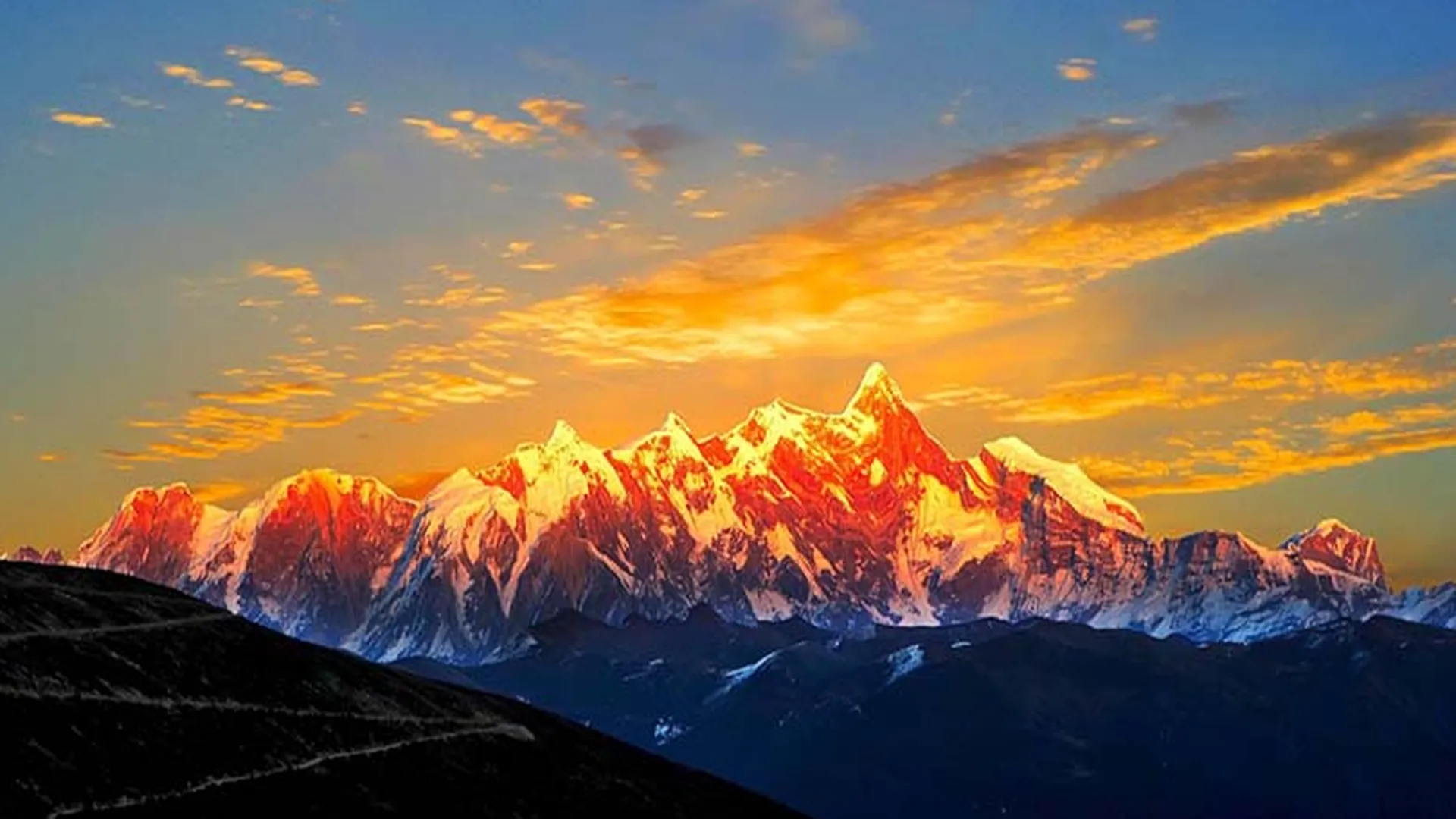
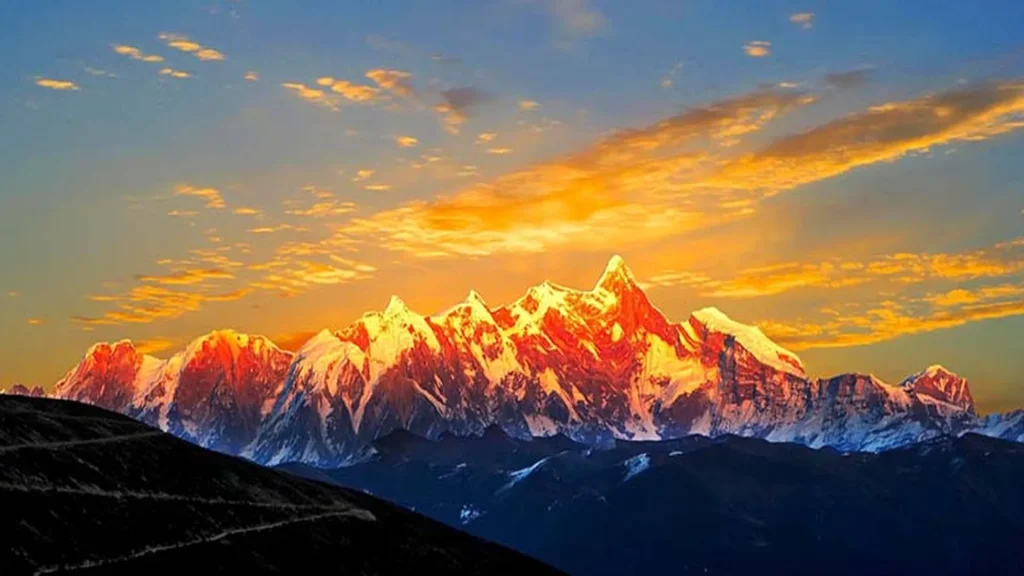
- Capturing the Legendary "Alpenglow" (日照金山): The sheer, triangular western face of Namcha Barwa acts as a flawless projection screen for the setting sun. Witnessing the "Alpenglow"—when the entire snowy summit suddenly ignites into a fiery, burning crimson triangle against the darkening sky—is an absolute mandatory bucket-list experience. You must enthusiastically secure your spot on the viewing platforms in Suosong Village or Zhibai Village with your tripod at least an hour before sunset.
- Physical Comfort and Oxygen Luxury: Unlike viewing Everest at a grueling, lung-crushing 5,200 meters, appreciating Namcha Barwa is a luxuriously comfortable experience. Suosong Village and the prime canyon viewing platforms sit at a very gentle altitude of roughly 3,000 meters. Surrounded entirely by dense, oxygen-producing primeval forests, the air is thick, rich, and moist. You can literally sit on the balcony of a lovely guesthouse, sipping hot Tibetan sweet tea, and gaze at the most beautiful snow mountain in China in absolute physical relaxation and zero fear of altitude sickness.
Enjoy Visa-Free Travel To China & Tibet
China has expanded visa-free entry policies for more countries. Our team can help confirm your route, permits, and documents before departure.
Gallery