About Bomi Peach Blossom Valley
Bomi Peach Blossom Valley (Bomi Taohuagou), located in Bomi County of the Nyingchi region, proudly holds the official Guinness World Record as the "largest wild peach blossom valley in China." For travelers accustomed...
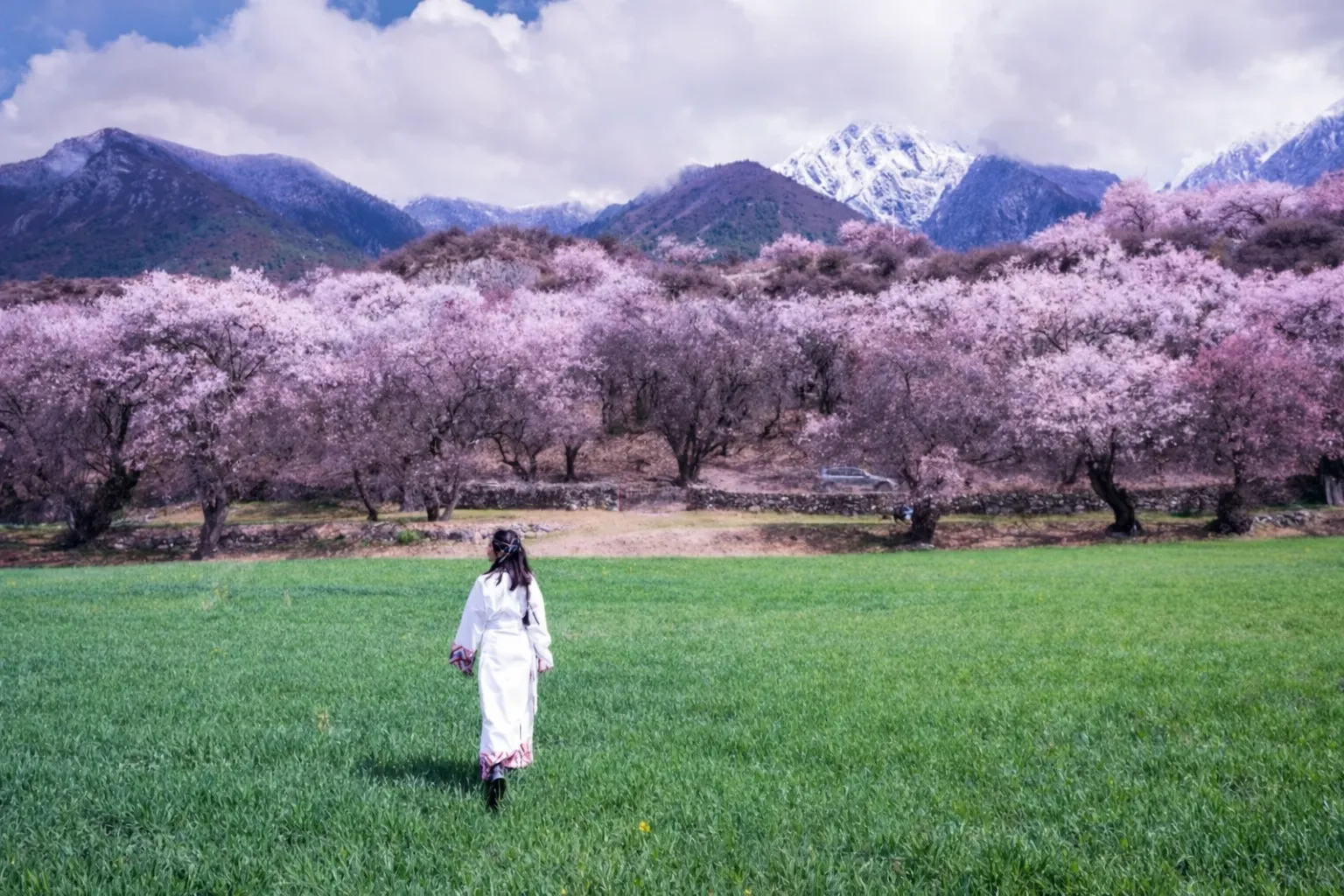
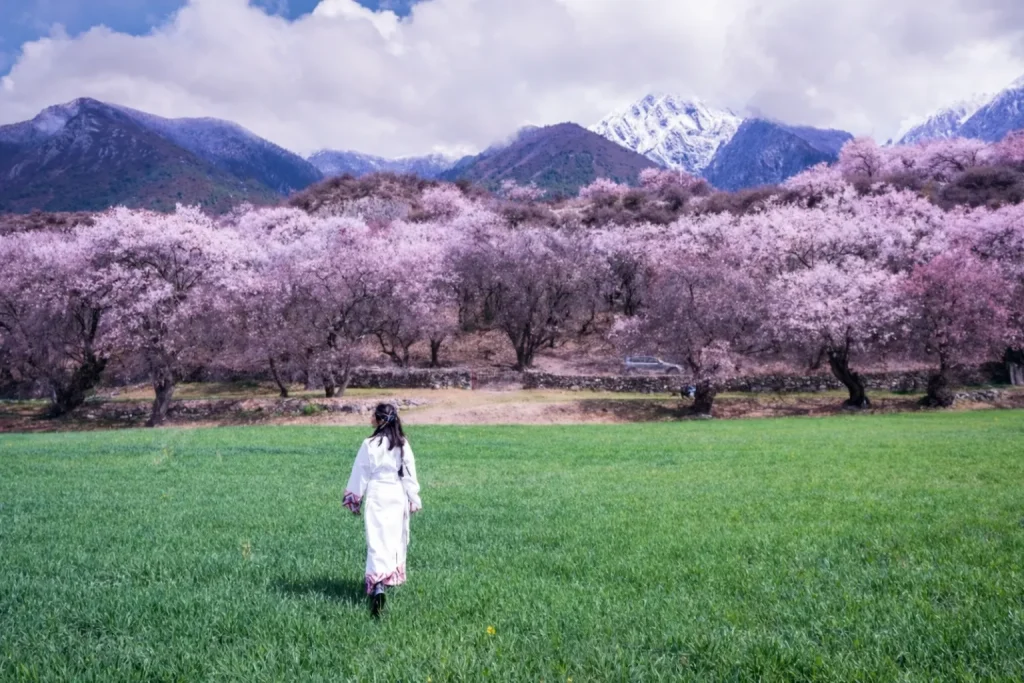
Bomi Peach Blossom Valley (Bomi Taohuagou), located in Bomi County of the Nyingchi region, proudly holds the official Guinness World Record as the “largest wild peach blossom valley in China.” For travelers accustomed to meticulously manicured, small-scale orchards in the lowlands, Bomi is a shocking, untamed revelation. The peach trees here are entirely ancient, massive, and spectacularly wild, dominating an incredibly lush, deep valley that stretches relentlessly for over 30 kilometers.
During a frantically short, magical window spanning late March to early April, this immense valley experiences the ultimate springtime explosion. Hundreds of thousands of century-old highland peach trees burst into bloom simultaneously, completely engulfing the landscape in a surreal, immersive sea of vibrant pink. But the true artistic masterpiece of Bomi lies in the extreme contrast of its geography: the delicate, roaring pink canopy intensely juxtaposes against the pristine, emerald-green waters of the Parlung Tsangpo River tributaries, while towering, razor-sharp, pure-white glaciers abruptly pierce the sky directly behind the flowers. This is the undisputed, legendary definition of “Nyingchi Spring.”
organically scattered throughout this endless ocean of blossoms are several traditional Gongbo Tibetan villages (such as Runa, Qingduo, and Galang). Vividly painted wooden houses, ancient stone fences, and vibrantly green patches of highland barley weave flawlessly into the peach groves, creating an idyllic, pastoral utopia that annually attracts the top landscape photographers from all across China.
↺ History
The wild peach trees of Bomi (botanically known as Prunus mira) are a profoundly resilient, indigenous species unique to the Qinghai-Tibet Plateau. They were never planted by humans for agricultural fruit production; instead, they have aggressively thrived and naturally propagated in these harsh, high-altitude ravines for thousands of years. The trees here are universally renowned for their massive, grotesquely twisted, and moss-covered trunks. An astonishing number of the blooming giants you walk beneath proudly exceed 400 to 500 years of age, standing as ancient, silent sentinels of the valley.
Historically, this stunning floral paradise starkly contrasted with its geopolitical reality. For centuries, the rugged, densely forested valleys of Bomi County were the fiercely independent domain of the formidable Bomi (Powo) Kings. Known for their distinctly warlike and untamed nature, these regional rulers frequently and violently defied central authority from Lhasa. The powerful, uncompromising spirit of ancient Bomi perfectly mirrors the incredible hardiness of these wild peach trees that survive the brutal highland winters only to produce such fragile, breathtaking beauty in spring.
Today, the swords have long been laid to rest. Bomi Peach Blossom Valley has been universally crowned the absolute crown jewel and the premier opening act of the grand, annual “Nyingchi Peach Blossom Festival.” This spectacular floral event has single-handedly transformed this once-isolated, fearsome frontier into China’s most intensely sought-after, luxurious spring destination.
Recommended Tours
View All
3 Days / 2 Nights ★ 4.8
3 Days Nyingchi Grand Canyon & Basum Tso Tour

6 Days / 5 Nights ★ 4.8
6 Days Tibet Panorama Tour with Nyingchi, Everest & Namtso
3 Days / 2 Nights ★ 4.8
3 Days Everest Base Camp Tour from Lhasa
How To Get There
Bomi Peach Blossom Valley is exceptionally accessible, with its entrance branching off immediately outside the Bomi county seat (Zhamu Town) directly via the legendary National Highway 318 (G318), pointing towards Medog County.
For the vast majority of travelers basing themselves in Nyingchi’s urban center (Bayi Town), reaching Bomi requires an epic, 230-kilometer drive eastward along the G318. This spectacular 4.5 to 5.5-hour journey is an attraction in itself, winding through the dense Lulang primeval forests, following the roaring Parlung Tsangpo River, and safely gliding over the massive modern suspension bridges and tunnels that have completely bypassed the once-deadly “Tongmai Graveyard” section of the old highway.
Crucially, the Peach Blossom Valley itself is not a single, enclosed, ticketed park. It is fundamentally a long, open, incredibly scenic rural asphalt road that penetrates over 30 kilometers deep into a stunning valley, connecting various remote villages. Therefore, self-driving or chartering a private vehicle is absolutely the best—and virtually the only—efficient way to explore it. This allows you to dictate your own pace, freely pulling over at any jaw-dropping grove or picturesque village along the route whenever the lighting is perfect.
ⓘ Travel Tips
- The Ruthlessly Brief "Golden Window": The absolute, solemn truth about Bomi Peach Blossom Valley is that its existence as a world-class attraction is painfully brief. You must surgically target your visit between late March and mid-April (due to its specific microclimate, Bomi's blossoms often peak several days earlier than those in the Yarlung Tsangpo Grand Canyon). If you arrive in late April, the petals will be gone, leaving a remarkably ordinary, albeit pretty, green valley. Do not travel here outside of the blooming season expecting a floral miracle.
- Defeating the Epic Traffic Jams: During the fleeting weeks of the Peach Blossom Festival, this peaceful, two-lane rural road becomes completely choked by a paralyzing influx of self-driving tourists and massive RVs from across the nation. To survive, you must drive deep into the valley (towards Qingduo Town) before 7:30 AM. Early arrival not only gifts you the breathtaking, soft morning light illuminating the pink petals through the mist, but entirely allows you to avoid the soul-crushing, hours-long gridlock that inevitably paralyzes the valley by midday. Using a drone here is highly, highly recommended to truly capture the shocking scale of the floral ocean.
- Zero Altitude Anxiety: Bomi rests at an incredibly comfortable, heavily forested altitude of roughly 2,700 meters. The air in this valley is intensely moist, thick, and exceptionally rich in oxygen. You can utterly banish all terrifying thoughts of "high-altitude sickness." You are free to run, hike up the hillsides, and sprint into the flower fields for hours feeling physically lighter and more energized than you do in most mainland cities. It is the ultimate, anxiety-free Tibetan spring experience.
Enjoy Visa-Free Travel To China & Tibet
China has expanded visa-free entry policies for more countries. Our team can help confirm your route, permits, and documents before departure.
Gallery