About Donggar and Piyang Ruins
The Donggar and Piyang Ruins, located near the villages of Donggar and Piyang in Zanda County of the Ngari Prefecture, form one of the largest cave temple complexes in western Tibet. The site consists of two separate ...
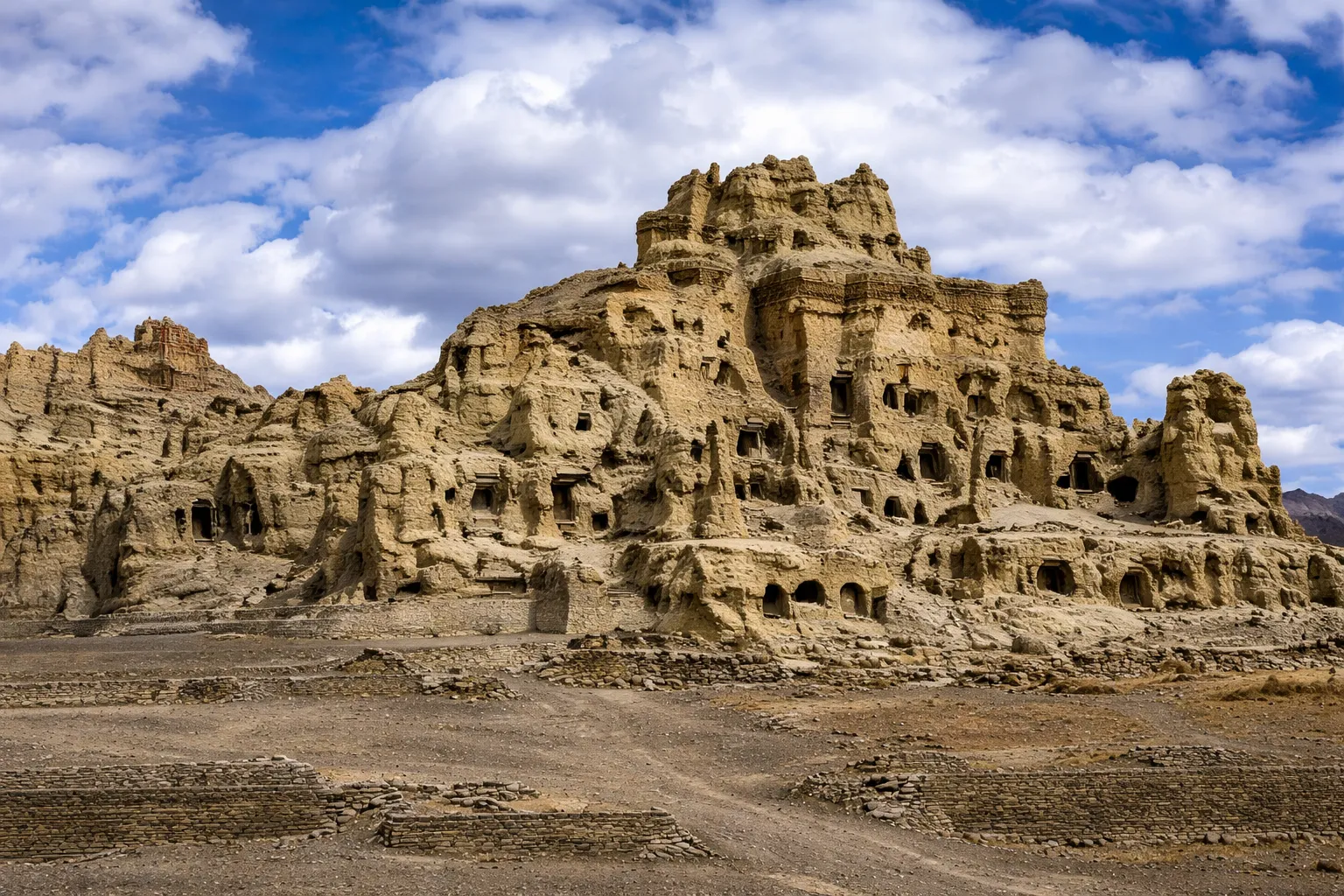
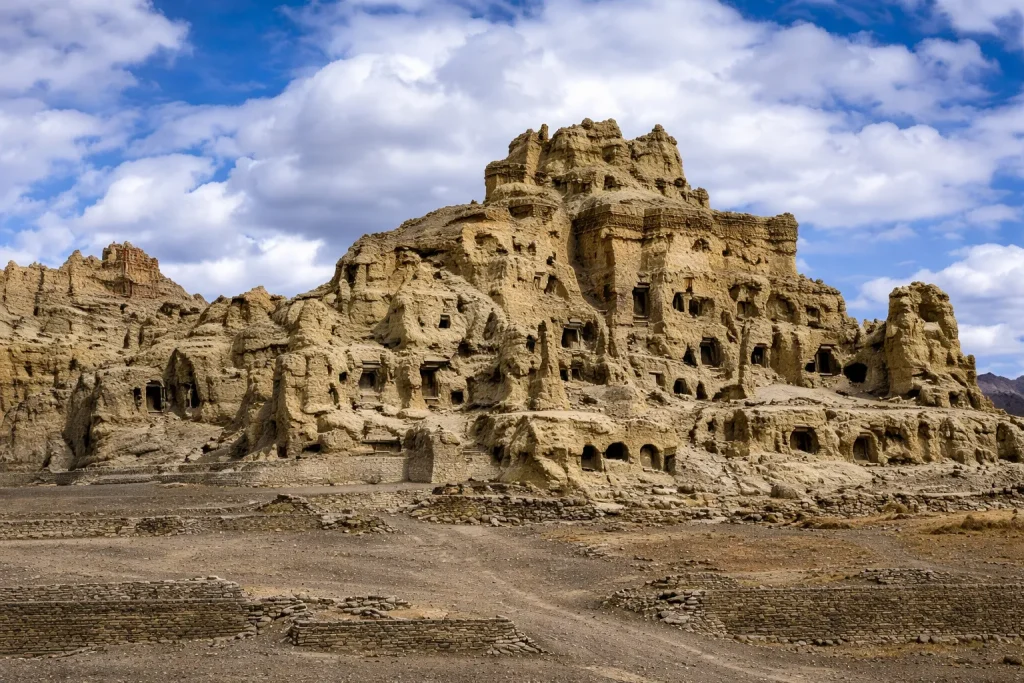
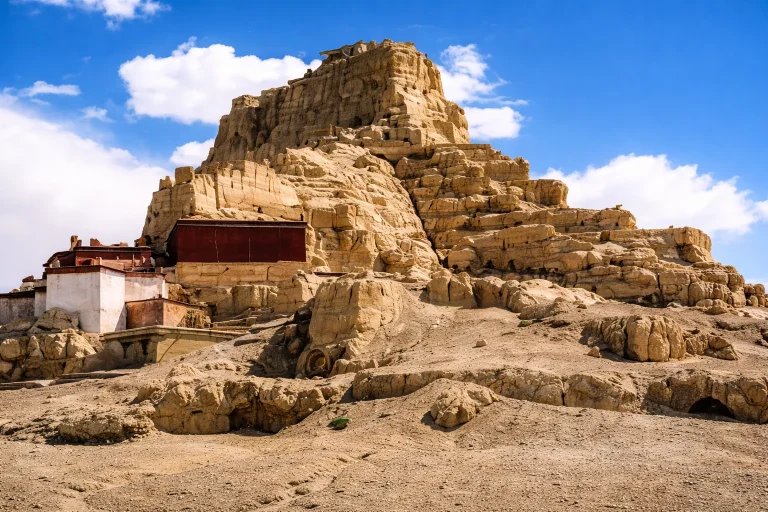
The Donggar and Piyang Ruins, located near the villages of Donggar and Piyang in Zanda County of the Ngari Prefecture, form one of the largest cave temple complexes in western Tibet. The site consists of two separate cave clusters situated several kilometers apart, containing a combined total of nearly one thousand caves carved into the cliff faces of the surrounding earth forest hills. Donggar is celebrated for its extraordinarily well-preserved ancient murals, earning it the scholarly title of “The Dunhuang of Tibet,” while Piyang is distinguished by its vast number of residential and meditation caves, presenting an even more expansive overall scale.
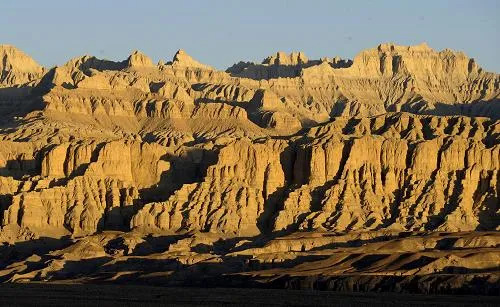
The murals preserved within the Donggar caves represent the absolute cultural crown jewel of the entire site. The paintings depict Buddhas, Bodhisattvas, celestial beings (Apsaras), donor figures, and various religious motifs, with colors that remain remarkably vivid to this day and brushwork of exceptional refinement. The artistic style uniquely blends the cultural traditions of India, Kashmir, Nepal, and indigenous Tibetan painting, making these murals invaluable primary source material for the study of western Tibetan Buddhist art history and the cultural exchanges of the Guge Kingdom. The surrounding landscape of classic Zanda Earth Forest formations creates a dramatic juxtaposition between stark natural desolation and ancient human artistic achievement.
↺ History
The history of the Donggar and Piyang Ruins is intimately linked to the Guge Kingdom, with the caves’ construction and active use spanning approximately from the 10th century to the 17th century CE—closely mirroring the rise and fall of the Guge Dynasty itself. During the Guge period, Donggar and Piyang functioned as important Buddhist practice centers and civilian settlements. Hundreds of caves were carved into the earth forest cliffs, serving dual purposes: elaborately decorated chapel caves for religious worship and mural painting, alongside simpler dwelling caves for monks in retreat and ordinary residents.
The Donggar and Piyang site was formally discovered and systematically surveyed by archaeological researchers in the 1990s. The exceptional quality and preservation of its murals—unmatched among comparable sites in western Tibet—attracted significant attention from both domestic and international academic communities. Research has revealed that the murals span a considerable creative timeline: earlier works show strong stylistic influences from India and Kashmir, while later pieces demonstrate a gradual transition toward distinctly indigenous Tibetan artistic expression. The site is currently designated a National Key Cultural Relics Protection Site and serves as an essential window into the Buddhist culture of the Guge Kingdom and the broader history of East-West cultural exchange along the ancient trade routes.
Recommended Tours
View All
6 Days / 5 Nights ★ 4.8
6 Days Tibet Panorama Tour with Nyingchi, Everest & Namtso
3 Days / 2 Nights ★ 4.8
3 Days Nyingchi Grand Canyon & Basum Tso Tour
3 Days / 2 Nights ★ 4.8
3 Days Everest Base Camp Tour from Lhasa
How To Get There
The Donggar and Piyang Ruins are situated approximately 40 kilometers north of the Zanda county seat. From Zanda town, the drive takes roughly 1 to 1.5 hours along a village road consisting of mixed unpaved dirt tracks and basic paved surfaces. General road conditions are fair but rough, and the use of a capable four-wheel-drive vehicle is strongly recommended. From the Ngari regional capital of Shiquanhe (Ali Town), visitors must first travel to Zanda County (approximately 260 kilometers, 5 to 6 hours), then continue northward to the ruins.
Most visitors schedule the Donggar and Piyang Ruins on the same day or on consecutive days with the nearby Guge Kingdom Ruins. Due to the extremely remote location, joining a multi-day “Ngari South Line” or “Ngari Grand North Line” chartered vehicle tour is the most common and reliable transportation method. The site has a basic parking area, and on-site management staff sell tickets and arrange for a designated caretaker to unlock and guide visitors through the principal mural caves.
ⓘ Travel Tips
- Mural Protection Rules: The murals inside the Donggar caves are extremely precious and fragile. Flash photography is strictly prohibited during visits, and some caves may ban photography entirely. Please strictly follow the instructions of on-site management personnel and do not touch any mural surfaces or cave walls.
- Road Conditions: Portions of the road from Zanda county town to the ruins are unpaved dirt tracks that may become muddy or washed out during the rainy season. Before departing, inquire locally about the latest road conditions and ensure your vehicle has adequate off-road capability and sufficient fuel reserves.
- Supply Preparation: Both Donggar and Piyang are extremely small natural villages with absolutely no commercial dining or accommodation facilities. Visitors must carry sufficient drinking water, food, and sun protection supplies. A same-day round trip back to Zanda county town for overnight accommodation is recommended.
- Visit Arrangements: The principal mural caves require an on-site caretaker to unlock the doors before visitors may enter. It is advisable to contact the Zanda County cultural relics management office or arrange a local guide in advance to confirm opening hours and visit logistics, avoiding the possibility of arriving only to find the key caves inaccessible.
Enjoy Visa-Free Travel To China & Tibet
China has expanded visa-free entry policies for more countries. Our team can help confirm your route, permits, and documents before departure.
Gallery