About Guge Kingdom Ruins
The Guge Kingdom Ruins are located along the banks of the Sutlej River (Langqen Zangbo), west of Toling Town in Zanda County, Ngari Prefecture. This expansive ancient fortress complex is built upon a 300-meter-high ea...
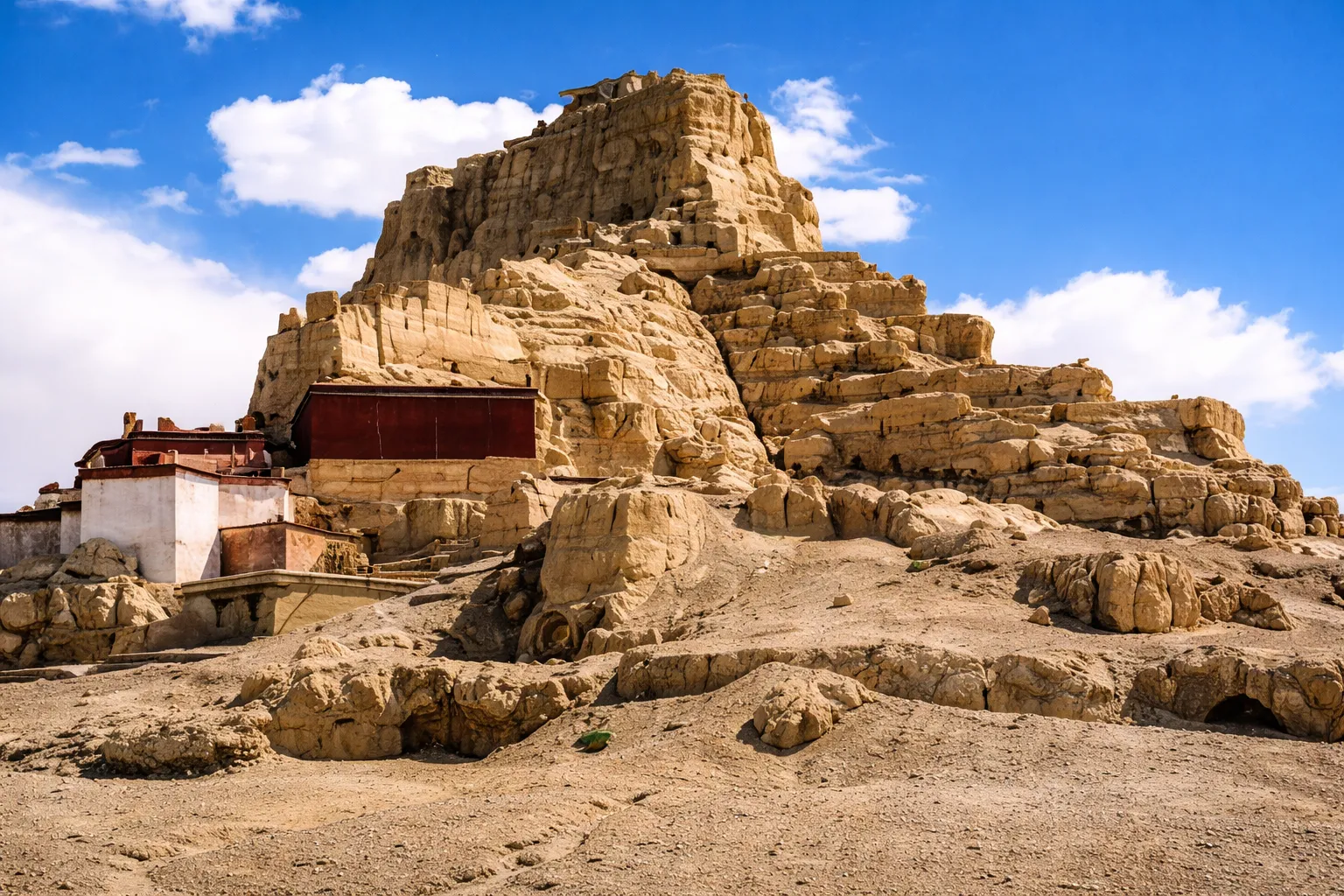
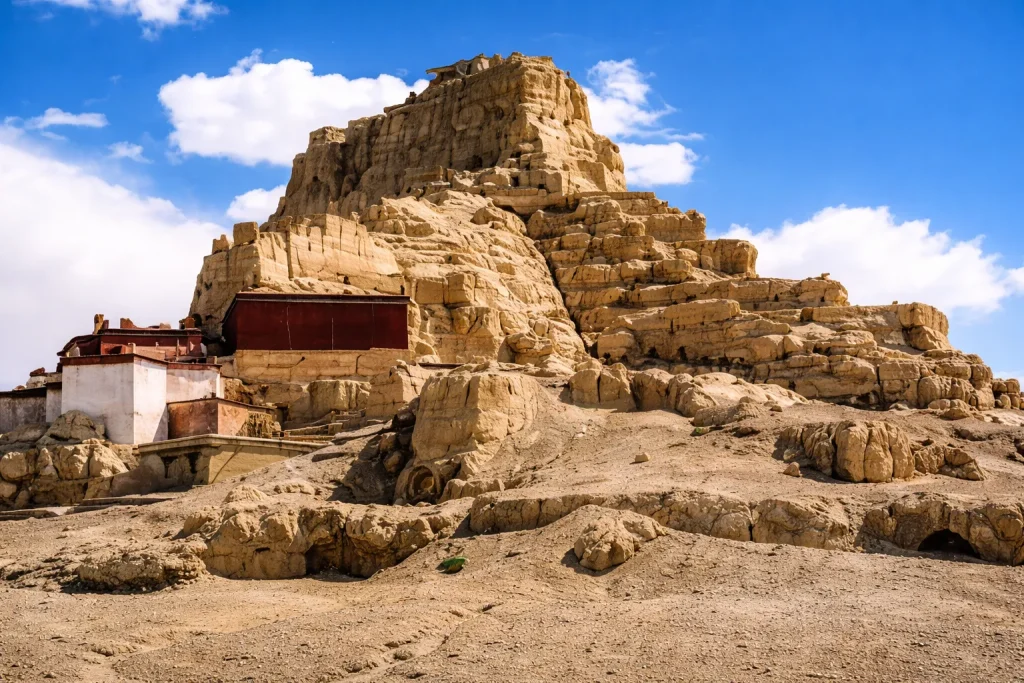
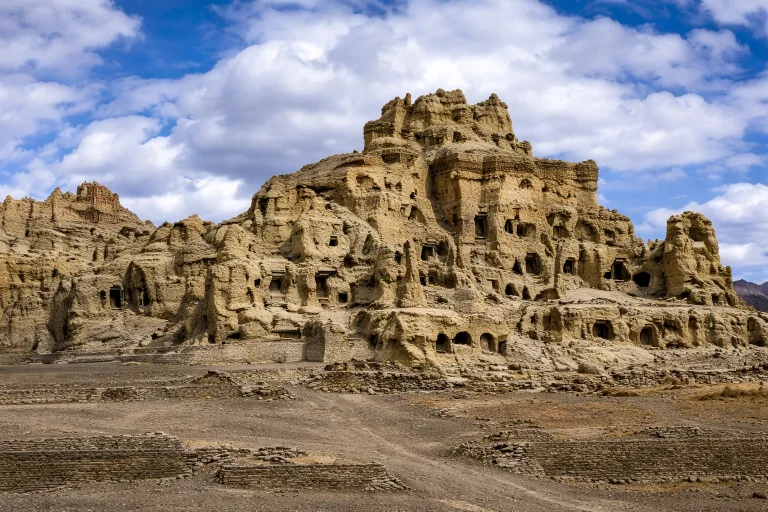
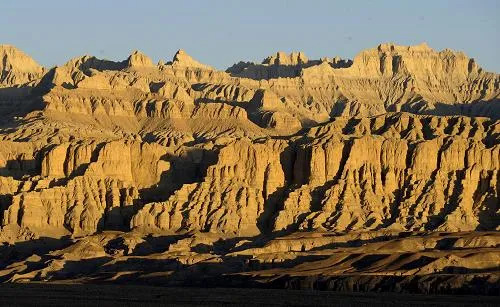
The Guge Kingdom Ruins are located along the banks of the Sutlej River (Langqen Zangbo), west of Toling Town in Zanda County, Ngari Prefecture. This expansive ancient fortress complex is built upon a 300-meter-high earthen hill, with structures arranged in ascending tiers: commoner dwellings at the base, temples and monasteries in the middle, noble quarters above, and the royal palace crowning the summit. The site contains nearly 600 rooms, along with hundreds of caves and secret tunnels, forming a remarkably grand architectural layout. The surrounding landscape features the famous Zanda Earth Forest (Tsaparang Badlands)—vast formations of wind-eroded clay pillars standing like silent sentinels across the barren plateau, creating a dramatic visual harmony with the ancient fortress. Under clear skies, the ruins set against the blue heavens and the earth forest present an exceptionally striking and austere scene, making it a highly sought-after destination for photographers and history enthusiasts.
↺ History
The Guge Kingdom was established around the 10th century by Jide Nimagoen, a descendant of the last emperor of the Tibetan Empire (Tubo Dynasty). After the collapse of the Tubo Dynasty, members of the royal family fled westward to the Ngari region, founding the Guge Kingdom in the Sutlej River valley. The kingdom served as a major political and religious center for approximately 700 years. During its peak, Guge controlled a vast territory with a substantial population and played a pivotal role in the “Later Propagation” (Chidar) of Tibetan Buddhism. The renowned translator-monk Rinchen Zangpo was based here, overseeing extensive scripture translation and temple construction projects that profoundly influenced the revival of Buddhism across Tibet. Several halls within the ruins still preserve exquisite ancient murals whose artistic style uniquely blends Indian, Nepalese, and indigenous Tibetan painting traditions, holding exceptional value for both historical and art research. However, around the mid-17th century, the Guge Kingdom abruptly collapsed during a war with the Ladakh Kingdom. A powerful civilization of reportedly 100,000 people vanished almost overnight, leaving behind one of Tibet’s greatest unsolved historical mysteries. In 1961, the Guge Kingdom Ruins were designated a National Key Cultural Relics Protection Site by the Chinese government.
Recommended Tours
View All
6 Days / 5 Nights ★ 4.8
6 Days Tibet Panorama Tour with Nyingchi, Everest & Namtso

3 Days / 2 Nights ★ 4.8
3 Days Nyingchi Grand Canyon & Basum Tso Tour

3 Days / 2 Nights ★ 4.8
3 Days Everest Base Camp Tour from Lhasa
How To Get There
The Guge Kingdom Ruins are situated approximately 18 kilometers west of Zanda county seat, about 260 kilometers from the Ngari regional capital of Shiquanhe (Ali Town), requiring 5 to 6 hours of driving. The route from Shiquanhe to Zanda County involves crossing the Ayi La Pass at approximately 5,300 meters elevation, with spectacular views of the Zanda Earth Forest formations along the way. Most visitors access the site through multi-day “Ngari South Line” or “Ngari Grand North Line” chartered vehicle tours. The road from Zanda county town to the ruins is fully paved and in good condition, taking approximately 20 minutes by car. The site has a proper parking lot and ticket office. After purchasing tickets, visitors walk up a hillside path independently. The climb from the base to the summit palace area takes approximately 40 minutes to one hour.
ⓘ Travel Tips
- Mural Preservation Rules: Several halls within the ruins contain precious ancient murals. Flash photography is strictly prohibited inside these chambers, and some halls may have attendants monitoring and restricting photography. Please strictly observe all cultural relic protection regulations and do not touch the walls or mural surfaces.
- Physical Preparation for the Climb: Although the site sits at a relatively moderate altitude of approximately 3,800 meters, the continuous uphill walk from the base to the summit palace takes about 40 minutes. At high altitude, visitors should slow their pace, proceed according to their physical condition, and carry drinking water. Wind can be strong at the summit, so a windproof jacket is recommended.
- Best Photography Times: Sunrise and sunset offer the most spectacular lighting for photographing the Guge Ruins. Golden sunlight illuminating the ochre-colored fortress walls and the surrounding Zanda Earth Forest creates exceptionally dramatic shadows and highlights. Arriving early or staying overnight locally is recommended to capture the optimal light.
- Supply Reminder: Zanda county town is relatively small and offers basic provisions, though variety is limited. It is advisable to stock up on food, water, and necessary medications before departing from Shiquanhe.
Enjoy Visa-Free Travel To China & Tibet
China has expanded visa-free entry policies for more countries. Our team can help confirm your route, permits, and documents before departure.
Gallery