About Lake Manasarovar
Lake Manasarovar (玛旁雍错), resting at a serene altitude of 4,588 meters in the shadow of the sacred Mount Kailash, is universally venerated as the holiest lake in all of Asia. In Tibetan, its name "Mapham Yumtso...
Lake Manasarovar (玛旁雍错), resting at a serene altitude of 4,588 meters in the shadow of the sacred Mount Kailash, is universally venerated as the holiest lake in all of Asia. In Tibetan, its name “Mapham Yumtso” means “Eternal and Invincible Jade Lake.” Covering an area of approximately 412 square kilometers with a maximum depth of over 70 meters, it holds the distinction of being one of the highest freshwater lakes in the world — a vast, pristine reservoir of crystal-clear water set within one of the most spiritually charged landscapes on Earth.
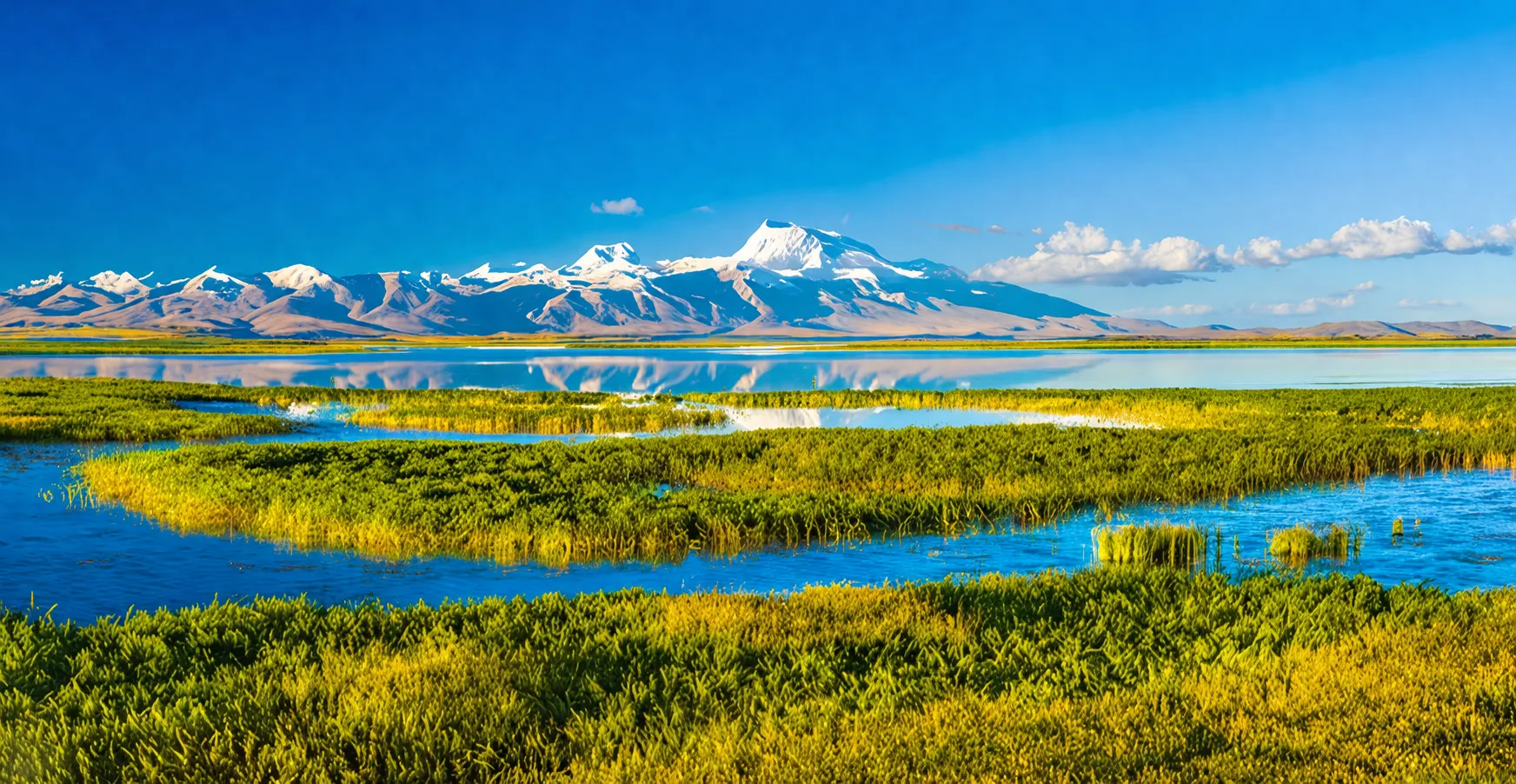
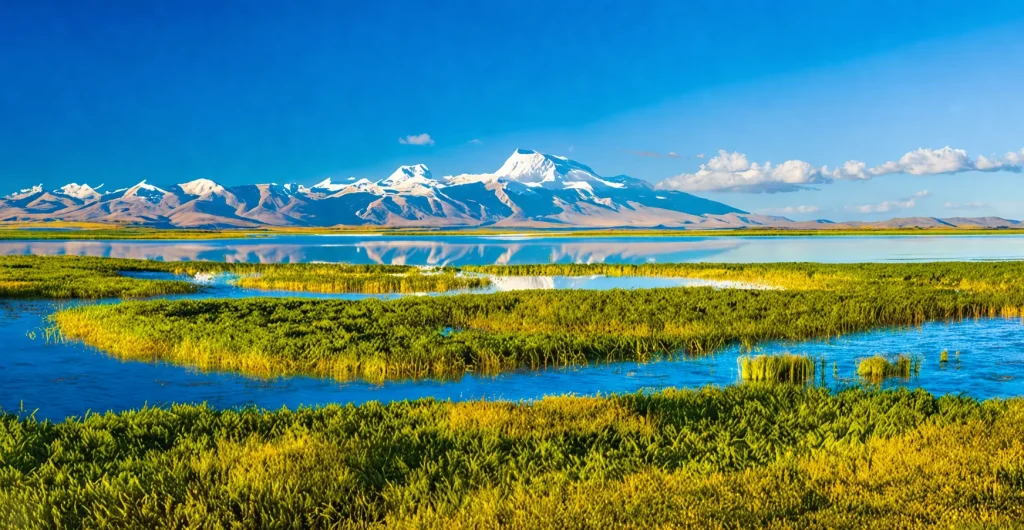
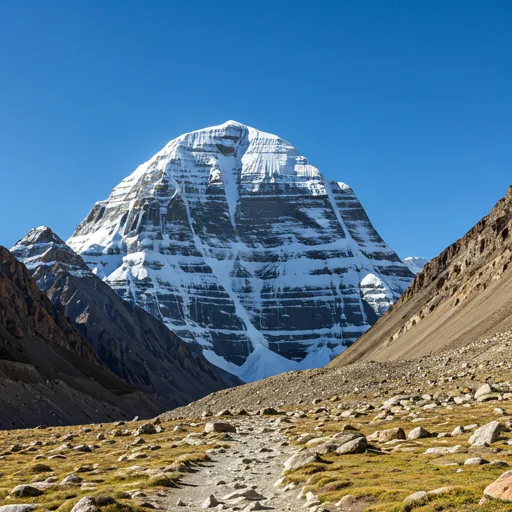
The visual splendor of Manasarovar is nothing short of divine. Its waters shift through an extraordinary spectrum of blues and greens throughout the day — from pale, luminous turquoise at dawn, through deep sapphire under the midday sun, to shimmering molten gold at sunset. On calm days, the lake’s surface becomes a flawless natural mirror, perfectly reflecting the snow-crowned pyramid of Mount Kailash to the north and the majestic Gurla Mandhata (纳木那尼峰, 7,694m) to the south. This iconic composition — two mighty Himalayan peaks framing a sheet of impossibly blue sacred water — is one of the most profoundly beautiful and spiritually moving vistas anywhere on the planet.
Unlike many high-altitude Tibetan lakes that are brackish or saline, Manasarovar is entirely freshwater — so pure and transparent that you can see the lakebed clearly at depths of several meters. Hindu and Buddhist pilgrims believe that drinking or bathing in its waters washes away the sins of a lifetime. The lakeshore is dotted with eight ancient monasteries, strategically positioned at the cardinal and intercardinal points like spiritual sentinels guarding the sacred waters. The entire atmosphere around the lake — the crystalline air, the vast silence, the eternal snow peaks — conveys an overwhelming sense of timeless purity and spiritual transcendence.
↺ History
The sacred history of Lake Manasarovar reaches back into the deepest strata of Asian spiritual tradition. In Hindu cosmology, the lake was first created in the mind of the supreme god Brahma, hence its Sanskrit name “Mānasa-sarovara” — literally “Lake Born of the Mind of God.” The ancient Hindu scriptures Ramayana and Mahabharata describe it as the dwelling place of divine beings and the earthly manifestation of the heavenly Lake of the Gods. For millennia, Hindu devotees have believed that Lord Brahma’s sacred swans (Hamsa) reside here, capable of separating spiritual truth from worldly illusion — just as legend says they can separate milk from water.
In Tibetan Buddhist tradition, Manasarovar is closely linked to the legendary Queen Maya, the mother of Shakyamuni Buddha. It is said that before giving birth to the Buddha, Maya was spiritually purified by bathing in this lake in a divine dream. The Bon religion, Tibet’s pre-Buddhist indigenous faith, also considers Manasarovar supremely sacred — according to Bon mythology, their founder Tonpa Shenrab first cleansed himself in these waters upon descending from heaven to the human realm.
The eight monasteries encircling the lake were established over many centuries, representing different schools of Tibetan Buddhism. Together, they form a sacred mandala around the holy water. Historically, devout pilgrims would complete a full circumambulation (Kora) of the lake — a demanding 88-kilometer trek along the rugged shoreline taking four to five days. This lake Kora, combined with the nearby mountain Kora around Kailash, constituted the ultimate double pilgrimage in Tibetan Buddhist practice — believed to guarantee liberation from the cycle of rebirth.
Recommended Tours
View All
6 Days / 5 Nights ★ 4.8
6 Days Tibet Panorama Tour with Nyingchi, Everest & Namtso
3 Days / 2 Nights ★ 4.8
3 Days Nyingchi Grand Canyon & Basum Tso Tour
3 Days / 2 Nights ★ 4.8
3 Days Everest Base Camp Tour from Lhasa
How To Get There
Lake Manasarovar is located in Purang County, Ngari Prefecture, in the extreme southwestern corner of the Tibet Autonomous Region. It lies approximately 30 kilometers southeast of the sacred Mount Kailash and about 1,200 kilometers from Lhasa — making it one of the most remote major pilgrimage destinations on Earth.
The transportation logistics for reaching Manasarovar are essentially identical to those for Mount Kailash, as the two sacred sites are visited together by the vast majority of travelers. The primary overland route from Lhasa follows the G219 Southern Route through Shigatse, Lhatse, Saga, and Zhongba — a journey of at least three to four days across the vast, high-altitude wilderness of the western Tibetan Plateau. Alternatively, travelers can fly into Ngari Gunsa Airport (阿里昆莎机场) near Shiquanhe town and drive approximately 250 kilometers south to the Kailash-Manasarovar area.
The gateway settlement for Manasarovar is the small lakeside village of Hor Qu (霍尔), situated on the lake’s northwestern shore along the main road. From Hor Qu, a rough track circles the lake, providing access to several of the historic shoreline monasteries. The nearest town with more substantial services is Darchen (塔钦, the Kailash base town), approximately 30 kilometers to the northwest, or Purang (普兰) county town, about 100 kilometers to the south near the Nepal and India borders.
ⓘ Travel Tips
- Best Time to Visit: May through June and September through October are the ideal windows. During these periods, the weather is relatively stable, the lake surface is fully thawed, and the reflections of Kailash and Gurla Mandhata are at their most spectacular. July and August bring monsoon moisture with frequent afternoon thunderstorms and cloud cover that obscures the surrounding peaks. Winter (November through March) sees the lake partially frozen and temperatures plummeting to minus 30°C — an extraordinary but extremely harsh and logistically challenging time to visit.
- Altitude Precautions: The lake sits at 4,588 meters, and most visitors will have already been traveling at sustained high altitude for several days before arriving. Nevertheless, the thin air remains a constant concern. If you plan to walk along the lakeshore or visit the monasteries, move slowly and deliberately. Carry portable oxygen and stay well-hydrated. The intense UV radiation at this altitude and latitude is ferocious — high-SPF sunscreen, quality sunglasses, and a wide-brimmed hat are absolutely essential.
- Sacred Bathing and Drinking: Many pilgrims ritually wash their hands and face in the lake or take a sip of the crystal-clear water as a spiritual purification rite. While the water is remarkably clean, modern travelers should exercise common-sense hygiene. If you wish to participate in the washing ritual, be aware that the water temperature — even in midsummer — is numbingly cold (typically 4-8°C). Full immersion is practiced by some devout Hindu pilgrims but is physiologically risky at this altitude and temperature for unprepared individuals.
- Lake Kora (Circumambulation): The full 88-kilometer Kora around Manasarovar takes four to five days on foot and is far less commonly attempted than the Kailash Kora. The trail is rough, poorly marked in places, and passes through extremely remote terrain with no facilities whatsoever. Attempting the lake Kora requires thorough planning, camping equipment, sufficient food and water supplies, and ideally a local guide. A more accessible alternative is to drive along the partial road circling the lake, stopping at key monasteries such as Chiu Monastery (直贡寺) perched dramatically on a hillside overlooking the western shore.
- Permits and Logistics: As with Mount Kailash, visiting Manasarovar requires a Tibet Travel Permit, Alien's Travel Permit, and Military Area Permit arranged through a registered travel agency. Independent travel is not permitted for foreign visitors. Stock up on all food, water, fuel, and medical supplies in Shiquanhe or before departing Lhasa — facilities in the Kailash-Manasarovar area are extremely limited and basic.
Enjoy Visa-Free Travel To China & Tibet
China has expanded visa-free entry policies for more countries. Our team can help confirm your route, permits, and documents before departure.
Gallery