About Sakya Monastery
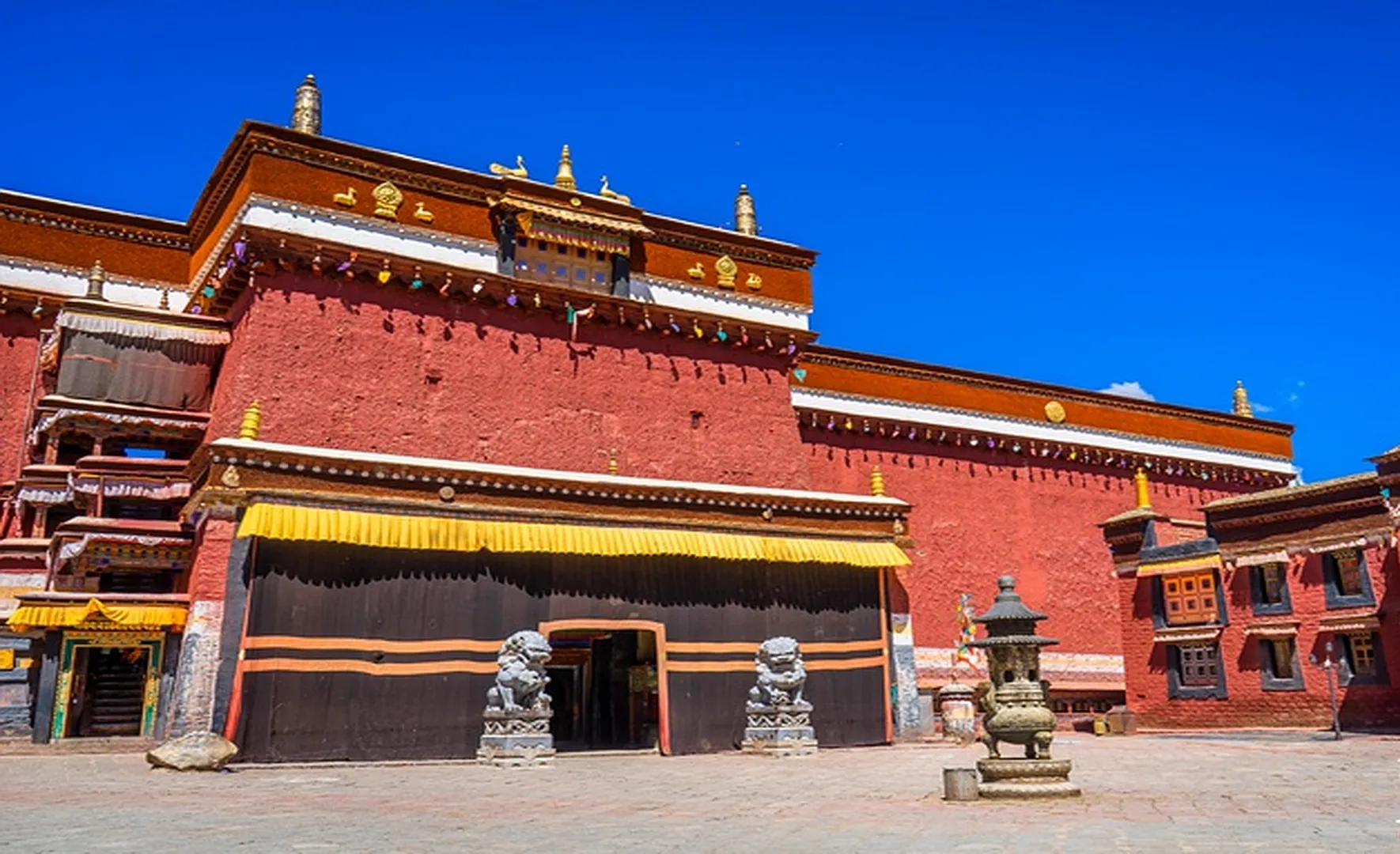
Sakya Monastery, located in Sakya County of the Shigatse region, is the principal, ancestral monastery of the Sakya sect (commonly known as the "Striped sect") of Tibetan Buddhism. Due to its inconceivably colossal an...
Sakya Monastery, located in Sakya County of the Shigatse region, is the principal, ancestral monastery of the Sakya sect (commonly known as the “Striped sect”) of Tibetan Buddhism. Due to its inconceivably colossal and priceless collection of ancient scriptures, murals, and thangkas spanning nearly a millennium, it has been profoundly praised by Chinese and international scholars worldwide as the “Second Dunhuang” of Tibet.
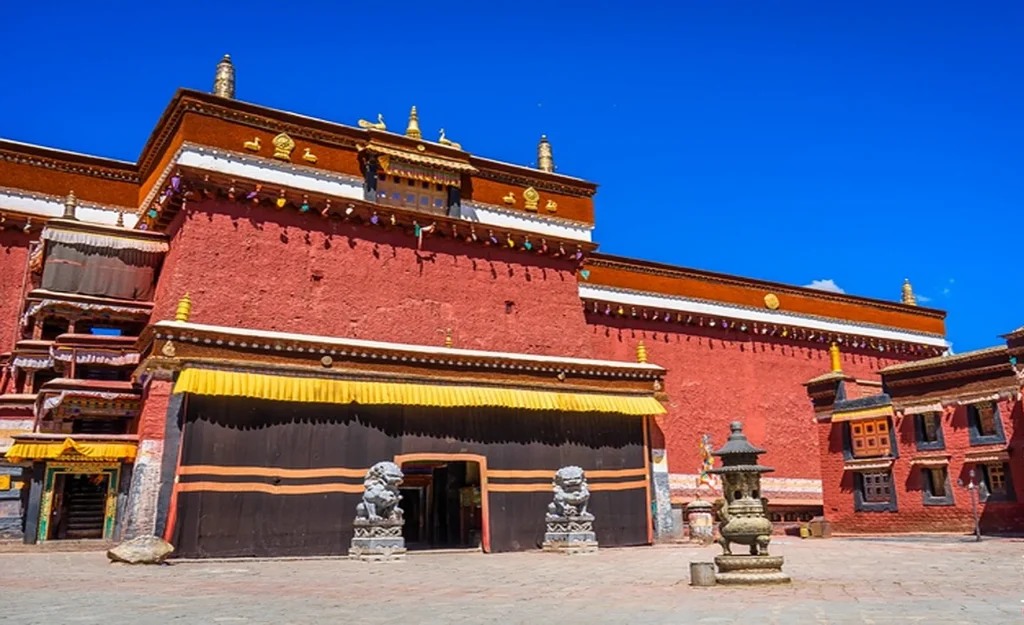
Visually, Sakya Monastery presents a brutally striking contrast to the vast majority of Tibetan temples, which are predominantly painted in pure white and deep red. Instead, Sakya resembles an absolutely impregnable, fortress-like medieval castle. Its overwhelmingly massive, dark-grey outer stone walls are painted with bold, unmistakable vertical stripes of red and white. In the Sakya sect’s doctrine, red symbolizes Manjushri (the Bodhisattva of Wisdom), white represents Avalokiteshvara (the Bodhisattva of Compassion), and grey (or dark blueish-black) signifies Vajrapani (the Bodhisattva of Power). The combination of these three colors is the origin of the sect’s colloquial name, the “Striped sect.”
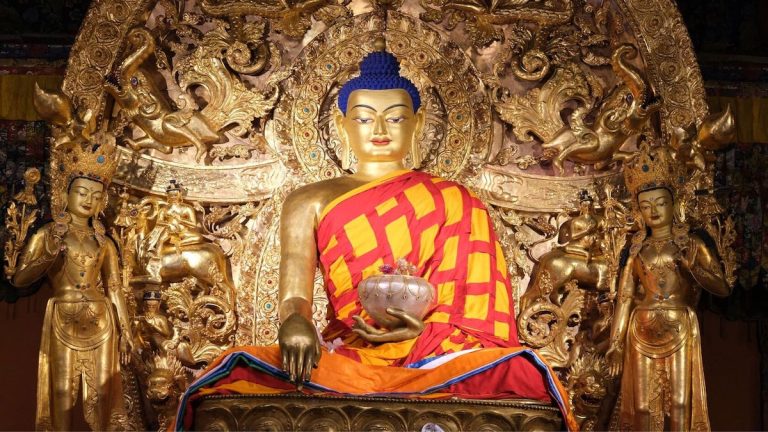
Stepping inside the main assembly hall (Lhakhang Chenmo) can instantly induce a sense of megalophobia due to its staggering scale. The massive ceiling of the hall is supported by 40 incredibly gigantic wooden pillars, including the legendary “Four Great Pillars,” each possessing its own dramatic mythical origin story (one is rumored to have been gifted by Kublai Khan and brought to Tibet by a tiger). Even more jaw-dropping is the space directly behind the main altar: an absolutely colossal “Sutra Wall” reaching 10 meters high and 60 meters long, built entirely by tightly stacking over 84,000 ancient, hand-written Buddhist texts. This unbelievable physical manifestation of knowledge and faith delivers an overwhelming visual and spiritual shock.
↺ History
The history of Sakya Monastery is an epic saga intertwined with the political fate of all of Tibet. It was founded in 1073 AD by Khon Konchok Gyalpo, the founder of the Sakya sect. The Trum River divides the monastery into the Northern and Southern sections. The Northern Monastery, built on the hillside, represents the earliest architecture (currently mostly in ruins, though parts are undergoing restoration). The fortress-like Southern Monastery, which visitors explore today, was initiated in 1268 AD on the flat plain by the famous Chogyal Phagpa, heavily financed by the Mongol Empire (Yuan Dynasty) government.
Throughout the 13th century, lasting over a hundred years, Sakya Monastery was the absolute political, religious, and cultural epicenter of the entirety of Tibet. During this critical era, two monumental historical figures of the Sakya sect—Sakya Pandita and his nephew Chogyal Phagpa—utilized extraordinary diplomatic wisdom to negotiate a peaceful agreement with the Mongol Prince Godan (and later Kublai Khan). This pivotal diplomacy formally incorporated Tibet into the territory of the Yuan Dynasty, preventing a devastating Mongol military invasion of the Snow Plateau. Phagpa was subsequently appointed as the “Imperial Preceptor” by Emperor Kublai Khan, establishing the powerful Sakya theocratic regime that governed Tibet.
This profound historical background perfectly explains the unique architectural form of the Southern Monastery. It was designed not merely as a place of Buddhist worship, but explicitly as an impenetrable military fortress meant to defend the supreme ruling power of Tibet. It was originally surrounded by double moats and fortified with towering watchtowers—a defensive temple architecture that is entirely unique in all of Tibet.
Recommended Tours
View All
3 Days / 2 Nights ★ 4.8
3 Days Everest Base Camp Tour from Lhasa
6 Days / 5 Nights ★ 4.8
6 Days Tibet Panorama Tour with Nyingchi, Everest & Namtso
3 Days / 2 Nights ★ 4.8
3 Days Nyingchi Grand Canyon & Basum Tso Tour
How To Get There
Sakya Monastery is located in Sakya County, situated roughly 150 kilometers southwest of the urban center of Shigatse city.
Geographically, it sits about 25 kilometers south of the main artery of National Highway 318 (G318) on a dedicated branch road. From Shigatse, travelers drive west along the G318, then turn left (south) near Rhega Township onto a well-paved, smooth asphalt road that leads directly to the Sakya county seat. The entire drive takes approximately 2.5 to 3 hours under normal conditions. Because the road conditions are excellent, it is highly accessible for chartered vehicles, carpools, or self-driving tourists.
Sakya Monastery is exceptionally well-suited to be included in multi-day classic itineraries traveling from Shigatse to Mount Everest Base Camp (Tingri County). For travelers heading toward the world’s highest peak, making this slight geographical detour to explore the ancient fortress and witness the treasures of the “Second Dunhuang” represents an absolutely unmissable, profound cultural pilgrimage.
ⓘ Travel Tips
- The Shocking Sutra Wall and Essential Flashlights: Because the interior of the main assembly hall is so immensely vast and ancient Tibetan architecture allows for very limited natural lighting, the hall remains in deep, solemn gloom year-round. If you truly wish to see the legendary giant wooden pillars or examine the mind-boggling "Sutra Wall" (where many priceless volumes are written in inks made of pure gold, silver, and crushed pearls), you absolutely must bring a powerful, high-beam flashlight . Do not rely solely on your phone's flashlight in this cavernous space.
- Altitude, Cold, and Pacing: Sakya Monastery sits at an elevation of 4,316 meters—a full 500 meters higher than Shigatse city (3,800m). The risk of experiencing altitude sickness increases significantly here. Furthermore, the massive, fortress-like stone walls block out the sun entirely, making the interior of the monastery bitterly cold with piercing drafts, even in the middle of summer. You must wear a warm, windproof jacket when entering, and maintain an extremely slow, measured walking pace to conserve oxygen.
- Walking the Fortress Walls: After visiting the main hall, absolutely do not miss the opportunity to climb the massive, castle-like outer walls of the Southern Monastery, which are painted in those iconic grey, white, and red stripes. Walking along the broad top of these defensive walls provides a spectacular vantage point to look down into the octagonal layout of the inner courtyards, and to gaze across the Trum River at the stark, tragic ruins of the ancient Northern Monastery on the sloped hillside—allowing you to physically feel the immense historical scale of the once all-powerful Sakya regime.
Enjoy Visa-Free Travel To China & Tibet
China has expanded visa-free entry policies for more countries. Our team can help confirm your route, permits, and documents before departure.
Gallery