About Pelkor Chode Monastery
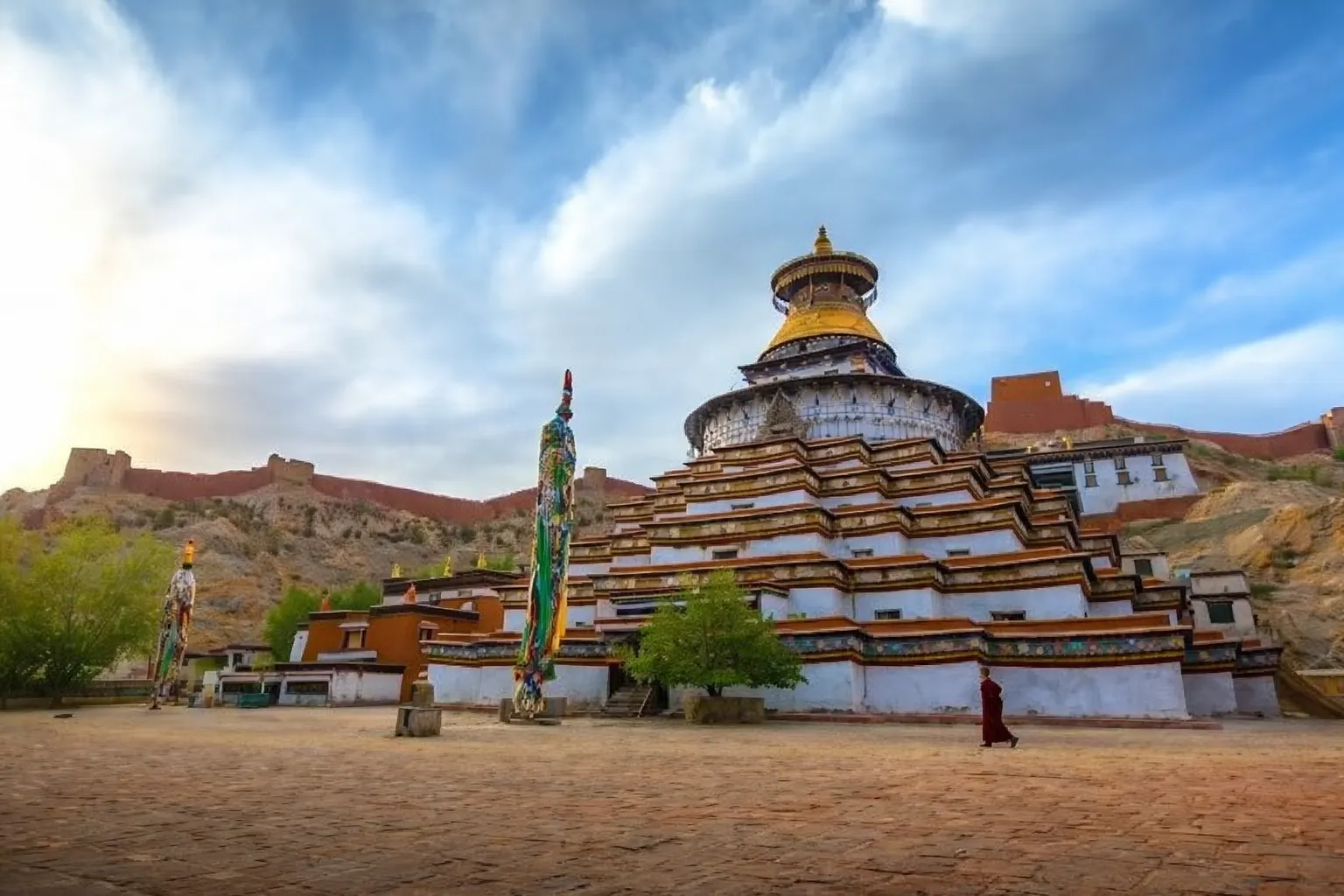
Pelkor Chode Monastery (also known as Palcho Monastery), located in the heart of Gyantse County in the Shigatse region, stands as an absolutely unique and totally extraordinary institution among the thousands of templ...
Pelkor Chode Monastery (also known as Palcho Monastery), located in the heart of Gyantse County in the Shigatse region, stands as an absolutely unique and totally extraordinary institution among the thousands of temples in Tibet. What sets Pelkor Chode apart is its incredibly rare status as a “three-sects-in-one” monastery. Within these very same walls, the Sakya, Kadam, and Gelug (Yellow Hat) sects coexist in perfect harmony, remarkably sharing the exact same main assembly hall for holding religious ceremonies. This level of profound religious tolerance and institutional syncretism is virtually unparalleled in the entirety of Tibetan Buddhist history.
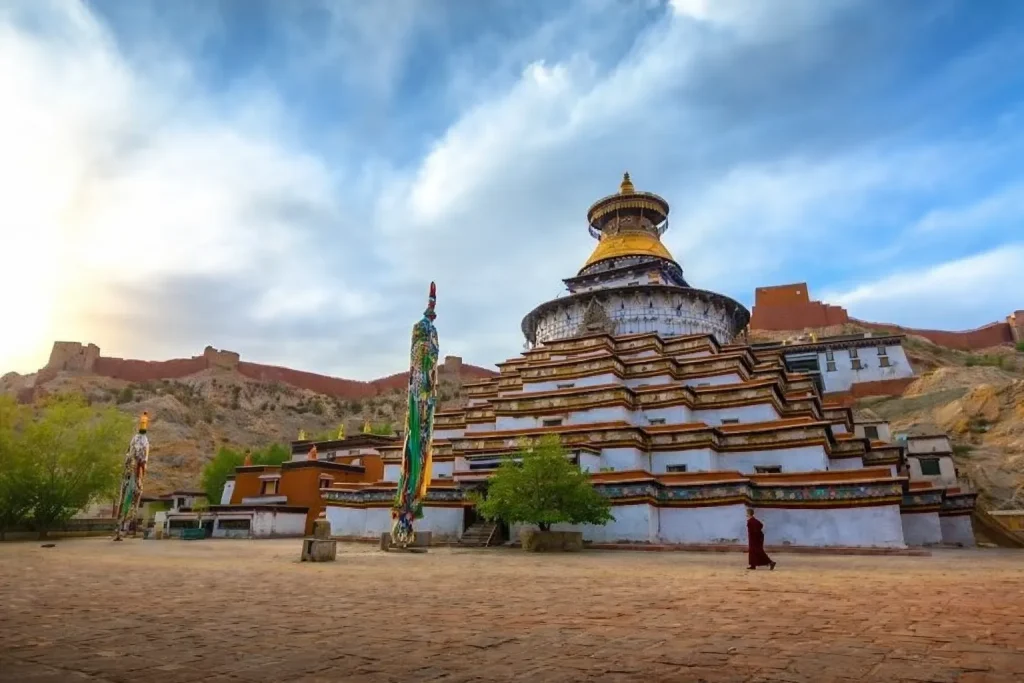
The absolute undisputed crown jewel and architectural masterpiece of the monastery is the world-renowned “Kumbum Stupa” (the 100,000-Buddha Pagoda). Recognized as the largest, most spectacular, and most exquisitely preserved stupa of its kind in all of Tibet, the Kumbum stands an imposing 32 meters high, featuring 9 ascending tiers and containing an astonishing 108 interlocking chapels. The architectural design is a brilliant, seamless fusion of classical Tibetan, Han Chinese, and ancient Nepalese artistic styles, crowned by a resplendent golden roof that blazes brilliantly under the plateau sun.
The title “100,000-Buddha Pagoda” is not merely poetic exaggeration. The interior walls of every single one of the 108 chapels are entirely covered with incredibly dense, vibrant, and painstakingly detailed murals of Buddhas, Bodhisattvas, and fierce Vajrayana deities. Combined with an immense array of ancient clay and bronze statues, the total number of sacred images housed within this single structure is estimated to reach a staggering 100,000. Stepping inside the Kumbum is akin to wandering through a deep, mesmerizing, three-dimensional labyrinth of classical Buddhist art.
↺ History
The history of Pelkor Chode Monastery dates back to the Ming Dynasty, specifically the year 1418, when it was collaboratively founded by the powerful local prince Rabten Kunzang Phak and Khedrup Je (a prominent disciple of Tsongkhapa and posthumously recognized as the First Panchen Lama). Approximately a decade later, the monumental construction of the Kumbum Stupa was initiated and successfully completed, firmly cementing the site’s religious importance.
Throughout the highly volatile centuries of Tibetan history, intense religious competition frequently resulted in one dominant sect violently expelling others and taking over their monasteries. However, owing to Gyantse’s unique geographical and political status as an affluent trading hub, Pelkor Chode entirely avoided this destructive cycle of religious cleansing. Instead, it displayed extraordinarily rare tolerance, absorbing elements from various newly arriving traditions over the centuries without entirely erasing the old ones. This unprecedented inclusivity is exactly why visitors today can observe such an incredible, eclectic mix of statues, ritual implements, and architectural styles all coexisting under a single roof.
The murals of Pelkor Chode—universally referred to by art historians as “Pelkor Art”—are widely considered the absolute zenith of 14th and 15th-century Tibetan Buddhist painting. Unlike many other major Tibetan monasteries where centuries of renovations and successive repainting have obscured original artworks, the vast majority of the murals inside the Kumbum Stupa miraculously survived eras of conflict and turmoil intact. They retain their pristine original compositions, the vivid hues of centuries-old mineral pigments, and their distinct Indo-Nepalese aesthetic influences. They constitute a totally priceless, irreplaceable archive for the study of classical Tibetan and Himalayan art.
Recommended Tours
View All
3 Days / 2 Nights ★ 4.8
3 Days Everest Base Camp Tour from Lhasa
6 Days / 5 Nights ★ 4.8
6 Days Tibet Panorama Tour with Nyingchi, Everest & Namtso
3 Days / 2 Nights ★ 4.8
3 Days Nyingchi Grand Canyon & Basum Tso Tour
How To Get There
Pelkor Chode Monastery is perfectly situated right in the center of the historic town of Gyantse. This ancient, culturally rich town lies almost exactly halfway along the golden southern tourism corridor connecting the capital Lhasa with the city of Shigatse.
Traveling from Lhasa along the highly scenic southern route (which necessarily passes the famous Yamdrok Lake and the magnificent Karola Glacier), the drive to Gyantse County takes approximately 5 to 6 hours. Alternatively, if departing from the urban center of Shigatse (near Tashilhunpo Monastery), the drive east to Gyantse along a wide, well-paved national highway takes merely about 1.5 hours.
Because the monastery sits so prominently at the deepest end of the Gyantse town center, transportation and accessibility are extremely convenient. Guests can easily walk or take a very short, inexpensive taxi ride from any hotel or guesthouse in town. When standing in the monastery courtyard and looking up, visitors are treated to a dramatic, unobstructed view of the formidable Gyantse Dzong (the ancient hilltop fortress famous for its heroic resistance against the British invasion in 1904) towering impressively over the town.
ⓘ Travel Tips
- Exploring the Kumbum Stupa: Unlike many tightly restricted stupas in Tibet, the Kumbum actually allows visitors to enter its interior and spiral upwards through its multiple tiers. The internal chapels are extremely tight, narrow, and often very dimly lit, so using your smartphone's flashlight is highly recommended to fully appreciate the exquisite details of the murals. As you climb higher, the esoteric nature of the Tantric murals becomes increasingly ancient, intricate, and deeply mysterious.
- Physical Exertion and Altitude Caution: Gyantse sits at a formidable altitude of approximately 3,900 meters. The wooden staircases connecting the levels inside the stupa are notoriously narrow and incredibly steep (pushing an 80-degree angle in some spots). Climbing such steep stairs in a severely oxygen-deprived environment can instantly lead to heavy panting, rapid heartbeat, and dizziness. You must climb extremely slowly, yield politely to others descending, and be very careful not to hit your head on the exceptionally low, ancient wooden doorframes.
- Photography and Open-Air Panoramas: While photography inside the main assembly hall and the internal chapels is generally either prohibited or requires a very steep fee, the exterior of the stupa offers incredible opportunities. As you ascend, every tier features an open-air circumambulation terrace. Absolutely do not miss the chance to step outside and take photos from these terraces. They offer spectacular, fully unobstructed panoramic views overlooking the monastery's red walls and golden roofs, the traditional Tibetan houses of old Gyantse town, and the sweeping, dramatic silhouette of the Gyantse Dzong fortress clinging to the massive rock above.
Enjoy Visa-Free Travel To China & Tibet
China has expanded visa-free entry policies for more countries. Our team can help confirm your route, permits, and documents before departure.
Gallery